


It seems the holiday of Christmas is a combination of many different cultures and many different rituals that have come together over the last 2000 years. The curiosity of the holiday is something that has always interested me.
It was last year that I showed a film about the history of Christmas to my World History students and since then, I've had a fascination with its history. Here's the post I wrote last year about the Americanization of Christmas, with the video in full.
http://ushistorysite.blogspot.com/2008/12/brief-history-of-americanization-of.html
Happy Holidays!
Showing posts with label Holidays. Show all posts
Showing posts with label Holidays. Show all posts
Friday, December 25, 2009
USHistoryBlog Rewind: The Americanization of Christmas


Tuesday, December 22, 2009
Naughty & Nice: A History of The Holiday Season - BackStoryRadio.org
The American History Guys of BackStoryRadio.org make history accessible... they talk in common terms and interview pertinent guests that help bring out the story of their discussion.
The History Guys, examine the history of the “holiday season” in America. Is Christmas more less religious then it used to be? How has Christmas evolved or changed? Is it true that Hanukkah was born as a reaction to Christmas? And how have American Jews helped to shape the winter holiday?
The conversation is laid back, informative and perfect for that long drive to the in-laws on Christmas afternoon.
So go to BackStoryRadio.org and download the show for yourself.
Tuesday, November 10, 2009
Veteran's Day
So as not to reinvent the wheel... I'm bringing back a post from last year...
This year, my favorite veteran... my grandfather is no longer with us - and I know he took this day to call many of his friends from the service and the grea t men he's met throughout his years.
Now Grandpop is in the sky hanging out with all his 'doughboys' celebrating upstairs.
Here's a brief history of veterans day - http://ushistorysite.blogspot.com/2008/11/veterans-day-brief-history.html
Saturday, July 04, 2009
Happy 4th of July
"Remember, democracy never lasts long. It soon wastes, exhausts, and murders itself. There never was a democracy yet that did not commit suicide. "
- John Adams
Every government degenerates when trusted to the rulers of the people alone. The people themselves are its only safe depositories.
- Thomas Jefferson
Hey guys... 233 Years and Counting...
Sunday, February 15, 2009
Presidential Love Letters

John and Abigail Adams
The first letters I attempted to find were those from John and Abigail Adams. As was the custom in those times, both John and Abigail chose pen names. John was Lysander, a Spartan war hero. Abigail at first was Diana, the Goddess of the moon, but later used the name Portia, the wife of Brutus a great Roman politician. Below is a letter from Abigail to her "Dearest Friend" John, from December 23, 1782.
See more letters and more information about John and Abigail below: http://www.libraryonline.com/default.asp?pID=57…should I draw you the picture of my Heart, it would be what I hope you
still would Love; tho it contained nothing new; the early possession you
obtained there; and the absolute power you have ever maintained over it; leaves
not the smallest space unoccupied.
My Dearest Friend, Letters of Abigail and John Adams

Abraham Lincoln
Nothing would make me more miserable than to believe you miserable – nothing
more happy, than to know you were so... ...If it suits you best to not
answer this farewell – a long life and a merry one attend you.
Harry Truman
And though these are not transcribed and tough to read, here are some letters from Harry Truman courting his love.
Other Presidents
And finally... a Who Said it? Presidential quiz featuring love letters from some our nation's great leaders. http://ww.neh.gov/news/humanities/2009-01/LoveLetters.html
And on a final note concerning The Kennedy's. It is reported that Jackie had burned her letters from celebrity suitors so that her secret affairs would remain a secret.
I'm sure there are plenty more out there, so if this has peaked your interest. Off you go... find more. And please share them here... Happy Valentine's!
Saturday, January 31, 2009
Obama Follows in Lincoln's Footsteps
 Most of us are familiar with President Obama wanting to take a train from Philadelphia, to his inauguration in Washington, D.C. Obama wanted to trace the route Lincoln took to his inauguration.
Obama's trip included a stop in Delaware to pick up Vice President-elect Joe Biden and a stop in Baltimore for a speech. But Lincoln was not originally scheduled to go to Delaware.
Lincoln was scheduled to make the trip from Springfield, east to Philadelphia to Harrisburg and finally from Harrisburg to Baltimore. But his trip did not go as planned.
So why did Lincoln make a stop in Philadelphia? And what happened that forced him to change his plans?
On February 11, 1861, Lincoln bid adieu to his supporters in Springfield, Illinois, and boarded a train east with an eventual destination of Washington. With several stops along the way, Lincoln finally arrived in Philadelphia on February 21.
Here is a link to one of his stops in Peekskill, NY, on February 19.
http://www.johngtesta.com/lincoln.html
The website belongs to the Mayor of Peekskill, John Testa and has some pretty cool information about Lincoln's stop there, and a statue dedication. Seems like a cool resource for Lincoln aficianados.
February 21st was George Washington's Birthday, and Lincoln was in Philadelphia to celebrate the event at Independence Hall. The night before arriving in Philadelphia, Lincoln's party was alerted to a plot to assassinate the President-elect by derailing the train from Harrisburg to Baltimore and killing Lincoln and everyone on board, or by attacking his carriage once he reached Baltimore.
Because of this, Lincoln decided to change his plans. He continued to Harrisburg as scheduled, but then decided to secretly return to Philadelphia to avoid the assassination attempt. All telegraph lines from Harrisburg were cut and guards were posted at various points along the train's route to ensure Lincoln's safety.
Once in Philadelphia, Lincoln transferred to a train in Wilmington, Delaware and then was once again secretly carried to Baltimore. He arrived in Washington on February 23, safely and in plenty of time before his March 4th inauguration.
Wednesday, December 24, 2008
A Brief History of the "Americanization" of Christmas
I think we can all agree that the modern day Christmas holiday is a far cry from the true meaning of celebration of the nativity. And though there are still many Americans who do celebrate the birth of Christ. Those that do break bread and un-wrap gifts with visions of wise man dancing in their heads, still have a lot owed to the minds behind the Americanization of Christmas.
Let's start with Santa Claus. The name Santa Claus is derived from St. Nicklaus. Nicholas lived sometime during the 3rd century in what is now the southern coast of Turkey. Nicholas was known for his generosity and his patronage to the poor, so the idea of Santa Claus is no stretch. And holidays celebrating St. Nicholas.
But what's the deal with the flying reindeer? And what's with the sneakiness through the chimney? These things, along with idea for Rudolph are pure 19th and 20th century American adaptations.
The image of the jolly old elf was developed from the 1823 poem "A Visit from St. Nicholas," better known now as "The Night Before Christmas." The poem's authorship has been disputed over the years, but what is truly remarkable is the imagination to turn St. Nick into a sleigh riding elf who used magical flying reindeer to descend onto the roofs of good girls and boys.
The 8 tiny reindeer were purely a product of the author's imagination. Regardless of whether the author is Clement C. Moore or Henry Livingston, millions of kids still check the weather reports and check the night sky to make sure Ol' St. Nick can get to their house safely.
Here's the vision of St. Nicholas from the poem.

"He was dressed all in fur, from his head to his foot,
And his clothes were all tarnished with ashes and soot;
A bundle of toys he had flung on his back,
And he looked like a peddler just opening his pack.
His eyes—how they twinkled! his dimples how merry!
His cheeks were like roses, his nose like a cherry!
His droll little mouth was drawn up like a bow,
And the beard of his chin was as white as the snow;
The stump of a pipe he held tight in his teeth,
And the smoke it encircled his head like a wreath;He had a broad face and a little round belly,
That shook, when he laughed like a bowlful of jelly.
He was chubby and plump, a right jolly old elf. . ."
But these were just words, the true look of Santa came from the famous political cartoonist, Thomas Nast. In 1863 Nast was commissioned to draw a series of annual drawings of the Santa Claus in Harper's Weekly. His drawings, based on the descriptions from the poem and an earlier Dutch representation of the character. The drawings continued through 1886 and helped to shape the Santa Claus we know and love today.
For a more robust story of the history of St. Nicholas, click on the link below. http://www.stnicholascenter.org/Brix?pageID=35
And then there's Rudolph. Believe it or not, Rudolph came to be as a marketing ploy to entice people to shop at Montgomery Ward. The departments store would release an annual coloring book as a gimmick to promote holiday shopping. In 1939, one of Montgomery Ward's copywriters, Robert L. May, came up with the idea for an ostracized reindeer with whom it would be easy to sympathize. The story was a hit, and thus a promotion to sell more toys has turned into an American holiday icon.
Even Snopes is on the great Rudolph caper: http://www.snopes.com/holidays/christmas/rudolph.asp
Leave it to the great United States to everything bigger, better and brighter!
If you've got some time, here's a pretty informational video about the History of Christmas.
The history of Santa starts at 28:26 into the video, and Rudolph starts at 34.56
-------------------------------
Further reading:
Santa Claus: A Biography
Nicholas: The Epic Journey from Saint to Santa Claus


Wednesday, November 26, 2008
Mary Had a Little Lamb... for Thanksgiving.
Ms. Hale worked tirelessly writing letters to the Presidents because she thought it was a good idea to have a holiday where all Americans could collectively give thanks. Her passionate letters and essays finally caught up with Abraham Lincoln. With a nation divided Lincoln thought the idea was a good one and thus declared the last Thursday in November, as Thanksgiving.
But FDR would later try to move this date up, in an effort to boost the economy and get an extra week for holiday shopping. For one year, 1940, this caused much confusion, so much that America actually had two Thanksgivings that year. Some states recognized FDR's decree, while others still followed Lincoln's last Thursday declaration. Congress eventually agreed to make it the 4th Thursday of the month instead of the last Thursday. You can read about the whole story here.
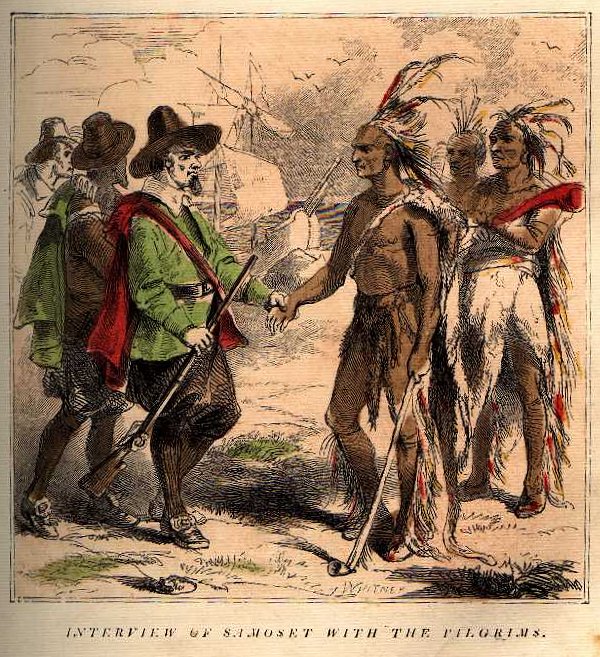
The first Thanksgiving, the one celebrated in 1621 by Plymouth (or Plimouth) colonists and Wampanoag Indians, didn't have lamb on the menu... but it may have had turkey.
There are only two items historians know for sure were on the menu; venison and wild fowl. These are mentioned in primary sources.
Below is one of the more detailed descriptions of the "First Thanksgiving". It comes from A Journal of the Pilgrims at Plymouth, in 1621, by Edward Winslow:
"Our harvest being gotten in, our governor sent four men on fowling, that so we might after a special manner rejoice together after we had gathered the fruit of
our labors. They four in one day killed as much fowl as, with a little help beside, served the company almost a week. At which time, among other recreations, we exercised our arms, many of the Indians coming amongst us, and among the rest their greatest king Massasoit, with some ninety men, whom for three days we entertained and feasted, and they went out and killed five deer, which they brought to the plantation and bestowed upon our governor, and upon the captain, and others. And although it be not always so plentiful as it was at this time with us, yet by the goodness of God, we are so far from want that we often wish you partakers of our plenty."
For a full list off what might have been on the menu, including eel and lobster, and what was definitely not on the menu... click the link below: http://www.history.com/minisites/thanksgiving/viewPage?pageId=873
Did You Know That...
According to the Cape Cod Cranberry Growers' Association.The cranberry is one of only three fruits that are entirely native to North American soil.
Without cheating, take a guess at what the other two are...
Happy Holidays.
Tuesday, November 11, 2008
Veterans Day: A Brief History

We've all heard the phrase... the 11th hour of the 11th day of the 11th month of 1918, when Germany signed the Armistice, ending The Great War.
It was made a legal holiday in 1938.
Several years later, in 1953, a shopkeeper from Kansas, named Al King had the idea to honor all American veterans on Armistice day and not just those from World War I. King had been very active in supporting all veterans, with the group American War Dads. A congressman from his home town, liked the idea and pushed the idea through Congress. And in 1954, President Eisenhower signed it into law, making the 11th of November officially Veterans Day. A day to honor all veterans of every war.
If there are any veterans you'd like to salute and honor, here is your forum. Please comment below and honor our soldiers.
I'll honor my Grandfather, Joe Vetter, who served in the Army during World War II as an Ordinance Supply Technician. We're fortunate he didn't see any combat action, but he did share a boat with General Patton and was given clean-up duty on Omaha Beach several days after D-Day, in the European theater. I know he's spending today calling all of his army buddies. Unfortunately, each year he makes fewer and fewer phone calls.
He's written a few heartfelt entries on this blog. Here is his take on D-Day, and here are his thoughts on the GI Bill.
Grandpop, I love you and salute you. Thank you.
And finally, for more stories go to http://www.americanprofile.com/veterans/, a site dedicated to telling the stories of real American heroes.
In honor of Veteran's Day, ShopPBS is offering 15% off War & Military Titles PLUS Buy More Save More starts today.


Monday, September 01, 2008
The History of Labor Day
Most call it the unofficial end of summer. Many use it as their last hoo-rah before heading back to school... It's another American excuse to barbecue, hang out with friends, drink some beer and close up the beach house...but what exactly is Labor Day?
According to the Department of Labor - Labor Day is "dedicated to the social and economic achievements of American workers" and their contributions to the "strength, prosperity, and well-being of our country."
On September 5, 1882, in an attempt to voice their demands for a better way of life, some 10,000 of over-worked laborers marched together through the streets of New York City, creating the first-ever Labor Day Parade.
There is debate as to who's idea Labor Day was... but I won't bore you with the specifics...(you can read more about it here). Starting in the 1890's there was increasing legislation movement for states to adopt and institute Labor Day to honor their hardworking citizens. Slowly more and more states adopted the idea.
By 1894, 29 states had adopted the holiday to honor their workers. On June 28 of that year, Congress passed an act making the first Monday in September of each year a legal holiday in the District of Columbia and the territories.
So there you have it... kind of a boring history, but a history nonetheless.
Teachers, prepare your lesson plans. Students find your thinking caps. The school year is upon us. Good luck to all.
For more information about Labor Day visit the Department of Labor website: http://www.dol.gov/OPA/ABOUTDOL/LABORDAY.HTM
Also - the history channel has a micro-site dedicated to Labor Day with images and videos: http://www.history.com/minisites/laborday/
Sunday, May 25, 2008
Remembering and Honoring Our Fallen Heroes

As of May 23, 2008 there have been 4,391 US and US coalition deaths in the Iraqi/Afghanistan conflict (this includes Americans and non-Americans). According to the Pentagon, there have also been 30,112 U.S. troops wounded.
So this memorial Day, which will be the last under the current regime and may be the last to turn a blind eye to the astounding number of casualties, I'd like to take a moment (or many moments) to honor the nearly 4,400 who have died.
CNN has done a tremendous job in trying to recognize each and every one with pictures, details of their unfortunate incident, age and hometown.
Please see the link below. http://www.cnn.com/SPECIALS/2003/iraq/forces/casualties/2008.05.html
What are your thoughts?
If you know any of these people... or anybody who has given their lives in an American conflict please honor them by commenting below. I do have hundreds of readers/day, so your message will be seen. Please feel free to write as much or as little as you'd like... this is your open forum to honor your loved ones, may they rest in peace.
PS -
U.S. war casualties dating back to the Revolutionary War.

Saturday, March 15, 2008
St. Patrick's Day - An American Tradition

The first recorded celebration of St. Patrick's Day in the American Colonies was in Boston in 1737. These early celebrations were by men of wealth and means living in the colonies.
In the wake of American independence, many Irish Catholics from all walks of life were continuously lured to the United States with the promise of religious freedom. It was this movement that prompted St. Patrick's day to take on a more common man personae.
In 1827 restrictions on Irish emigration was lifted by Britain, and by 1835, more than 30,000 Irish immigrants were arriving in New York each year. These impoverished, uneducated immigrants established themselves quickly with their undying loyalty to their new country. The Irish came in droves and promptly joined the police and fire departments and railroad companies. To this day, many police officers, firemen, and railroad workers carry on the tradition of their forefathers by doing what their daddy did. Just look through the roster of any New York or Philadelphia police department or fire company and you'll see a plethora of Irish names.
As the number of Irish-Americans grew, so did the celebration of St. Patrick's day. Along wit hthis came the political power of the Irish communities in Boston, New York and Chicago. It was these political groups that helped get John Fitzgerald Kennedy, our nation's first and only Catholic President into office. This also explains the Boston Celtics and the Chicago River being dyed green during Chicago's St. Patrick's day celebration.
Many of the Irish in America used the March 17th celebrations as a platform for their American right of free speech. The 1970s brought a tone of political activism on St. Patrick's day with fundraising for Irish charities calling for the withdrawal of British occupancy in Northern Ireland. This brought the awareness of The Troubles in Northern Ireland to the United States.
For those that are unfamiliar with this conflict, Northern Ireland has been the site of a violent and bloody political conflict between Nationalist who want Northern Ireland to be part of the Irish Republic and the Unionists who wish to remain part of the United Kingdom.
And what would an Irish peace treaty be without Bono, pictured between David Trimble (left) and John Hume, respective leaders of Unionists and the Nationalists in a 1998 concer supporting the Good Friday agreement.
Clinton's action, is similar to the action's of Jimmy Carter at the Camp David Accords, where Muhammad Anwar al-Sadatand of Egypt and Menachin Begin of Israel were invited to Jimmy Carter's Camp David retreat to iron out their differences. The two countries did eventually find peace... here is the framework of that agreement.
PS - And here's a neat article on Green Beer, i.e. environmentally friendly breweries. Off the subject slightly, but worthy of a look-see.
Here's 1,001 Things Everyone Should Know About Irish American History
And finally, here's a candid picture of Ronald Reagan celebrating St. Patrick's Day. For more pics of Ronald Reagan, go to http://www.reagan.utexas.edu/archives/photographs/candid.html

Sunday, February 17, 2008
A Brief History of President's Day -

In 1796, during the last full year of Washington's presidency the United States decided to honor their great president by celebrating his birthday. Washington was born on February 22, 1732. Though according to the old style calendars which predate the mid-18th century his birthday falls on February 11. I know it's confusing.
By the early 1800s Washington's Birthday had become an established, though not official, national holiday. Americans would honor Washington by throwing lavish Balls and receptions attended by prominent socialites and public figures. The common man would celebrate, as we American's still do, by gathering in public houses and taverns to honor Washington as another excuse to drink.
Then another well-respected February born president came onto the scene. Abraham Lincoln, whose birthday falls on the 12th of February, was formally honored on his birthday in 1865, one year after his assassination. To commemorate his death, both houses of Congress gathered for a memorial address, on the day of his birth.
Unfortunately for Lincoln, his birthday did not become a legitimate national holiday like Washington's did, but it did become a legal holiday in several states.
Washington's Birthday became an official holiday in 1880, becoming the first federal holiday to honor an American citizen. It was to be celebrated on February 22.
Don't click away yet... there's more.
In 1968, legislation was put in place to simplify yearly calendars and give federal employees some fixed 3-day weekends. The act started in 1971 shifting the observation of Washington's Birthday to the third Monday in February instead of on the 22nd. And although this holiday is still officially known as Washington's Birthday, it has become popularly known as Presidents' Day. This now makes the third Monday in February a day for honoring both Washington and Lincoln. Though I'm pretty sure it's okay to honor other presidents as well.
And in true American fashion, Presidents' Day is also synonymous with sales and shopping. Do you think George and Abe mind people honoring them by buying discounted appliances?
PS - Though most put the possessive apostrophe for President's Day after the 'T' (like I did here and in in my title for search engine optimization reasons), it is incorrect. This spelling indicates a day belonging to one President, while putting the apostrophe after the 'S', in spelling Presidents' Day, indicates a day belonging to more than one President.
Wednesday, February 13, 2008
This History of Black History Month
 Have you ever heard of Dr. Carter G. Woodson? No? Me neither. But maybe we should have.
Dr. Carter G. Woodson, was born to parents who were both former slaves. As a child he spent his days working in the coal mines of Kentucky. He enrolled to go to high school at age twenty and graduated two years later, and continued his schooling finally earning a Ph.D from Harvard.
While studying at Harvard, Dr. Woodson noticed that the history books he was learning from lacked or ignored the contributions of the black-american population. And when blacks were mentioned, it was in ways that reflected their inferior social standing.
This upset Woodson to the point where he was motived to challenge himself to write more black Americans into the history books. In 1915, Woodson established the Association for the Study of Negro Life and History (now called the Association for the Study of Afro-American Life and History). A year later he founded the Journal of Negro history, which quickly became a well respected publication. 1926 brought the launch of Negro History Week, which aimed to bring the contributions of blacks throughout history to national attention.
Since 1926, America has recognized black history first as "Negro History Week" and later as "Black History Month"
Why February?
Woodson strategically chose the second week in February to commermorate Negro History Week because the birthdays of two men who greatly influenced the advancement of the black American population; Frederick Douglass (February 14) and Abraham Lincoln (February 12).
Because he was born a slave, thus not knowing the date of his real birthday, Douglass adopted February 14 as his birthday. He chose this date because his mother used to call him "Little Valentine".
 The transition to Black History Month is only natural considering all of the significant events in African-American history that have occurred in February.
 February 23, 1868: W.E.B DuBois, civil rights leader and co-founder of the NAACP, was born.
February 3, 1870: The 15th Amendment was passed, granting blacks the right to vote.
February 25, 1870: Hiram R. Revels, becomes the first black U.S. senator.
February 12, 1909: The NAACP was founded.
February 1, 1960: The famous "sit-in" at the Greensboro, N.C., segregated Woolworth's lunch counter (pictured)
February 21, 1965: Malcolm X was shot and died.
February 4, 2007 - Tony Dungy, coach of the Indianapolic Colts becomes the first African-American head coach to win the Super Bowl. His counterpart, Lovie Smith of the Chicago Bears was also African-American. They were the first African-American coaches in history to coach in the big game.
So whether you believe Black History Month is for good for the advancement of the awareness of black american accomplishments, or whether you believe giving the study of black history it's own month is defacto segregation. One thing is undoubtedly true. Dr. Carter G. Woodson accomplished his goal of writing more black Americans into the history books.
Tuesday, February 12, 2008
Abraham Lincoln's Birthday: February 12, 1809
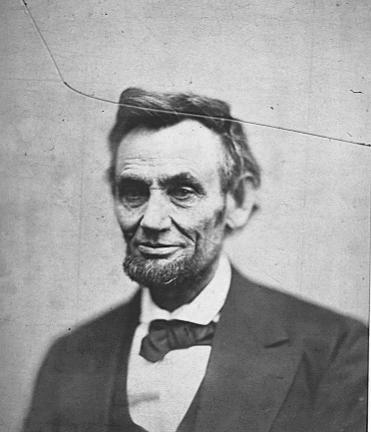
Don't get too excited. Plans have been in place for some time to celebrate Lincoln's Bicentennial with pomp and circumstance which is befitting for such an outstanding historical figure.
In Illinois, they take Lincoln's birthday seriously as all Chicago public schools and state offices will be closed. Although garbage will be picked up as normal. I'm sure Abe wouldn't have it any other way.
Lincoln was born in Hodgenville, Kentucky, where apparently everything is named Lincoln. And where the lion share of the Bicentennial celebration will occur.
He spent his summers in Washington DC.
He spent much of his childhood in Indiana, where there is a national memorial. And where Indiana will also be celebrating Lincoln's 200th birthday. And where Spencer County Indiana is excited for all the publicity.
And now this guy is claiming Lincoln's ties to Idaho are stronger than any other state.
All of this begs the question... which state is Lincoln's true home state? My thoughts are all of them can claim Lincoln as their own. Can't we in Philadelphia and those in Cincinnati both claim Pete Rose?
Want to figure it all out... try ALincolnBlog.Blogspot.com, by Brian Dirck, professor at Anderson University and author of several Lincoln books. It is always my first stop for Lincoln information.
Here's his take on the states claiming Lincoln.
The Lincoln Bicentennial website really is a cool site. It has a Lincoln quiz, an interactive timeline, all sorts of Lincoln information, and lesson plans for teachers. Check it out - http://www.lincolnbicentennial.gov/
Oh... and Happy Birthday Abe.
Wednesday, December 26, 2007
I'm Dreaming of a White House Christmas
 Whether its by an expedition through the woods to chop down a spruce, or a last-minute run to the trailer in the parking lot; the Christmas tree, no matter how it's brought home has become an American tradition. And like any other Americans, the family living in the big white house on Pennsylvania avenue has tradition surrounding their holiday evergreen as well.
The tradition of a placing a decorated tree in the White House began in 1889 during the Presidency of Benjamin Harrison. Harrison, who gave turkeys and gloves to his employees for Christmas was the first president to have a tree.
And what began as a family gathering has become a national tradition. Through the years, the White House Christmas tree has personified the First Family, and has been an inspiration in representing both the times and tastes of the country.
In 1895, for example, Grover Cleveland's First Lady Frances Cleveland created a "technology savvy" tree, which donned electric lights (a white house first).
Thee ever-fashionable Jackie Onassis, started the tradition of Christmas tree themes in 1961 when her tree was decorated with toys from Tchaikovsky's Nutcracker Suite.
Today the tradition continues as each first lady selects her own theme which is usually a sign of the times. In 2001, current First lady Laura Bush chose "Home for the Holidays" which represented the family homes of many of the past Presidents.
In 1998 Hillary Clinton themed her tree a "Winter Wonderland" and trimmed the tree with snowmen, mittens and hats.
Pictured above, the Nixon's tree represented each of the 50 states with ornaments made by disabled workers in Florida.
So, don't be afraid to go all out on your Christmas tree theme. It is after all, an American tradition.
Merry Christmas!
For more information about Christmas at the White House and to see more Christmas tree pictures, go to http://www.whitehouse.gov/president/holiday/whtree/
Wednesday, June 06, 2007
D-Day: A Veteran's Thoughts on Omaha Beach
 "As I write this it is 4:27AM DST. It is already 10:27 on the beaches of Normandy. 63 years ago some of the greatest people ever to pull on a helmet paid the ultimate sacrifice. Thousands of other lay in hospitals. Thank GOD many made the hill. I was not one of them.
When I fell out for detail at *:00 AM in Kingston Bagby, England. Our First Sergeant announced this fact and I said a silent prayer. Why I didn't get the call, only GOD and the US Army know.
But I am asking you to join me for all of those 11 million that served and especially those 10,000 plus that lay in peace under white crosses at the top of OMAHA BEACH."
Joe Vetter, World War II Army Veteran
Monday, May 28, 2007
The History of Memorial Day
 Originally known as Decoration Day, Memorial Day was a day set aside to honor the nation's Civil War casualties by decorating the soldier's graves.
Memorial Day was first widely observed on May 30, 1868 to commemorates the sacrifices of the Civil War soldiers. General John A. Logan of the Grand Army of the Republic, an organization of former soldiers and sailors proclaimed the following:
"The 30th of May, 1868, is designated for the purpose of strewing with flowers, or otherwise decorating the graves of comrades who died in defense of their country during the late rebellion, and whose bodies now lie in almost every city, village, and hamlet churchyard in the land. In this observance no form of ceremony is prescribed, but posts and comrades will in their own way arrange such fitting services and testimonials of respect as circumstances may permit."
At first observance of Decoration Day, in 1868, General James Garfield (it would be another 14 years until he would be President) spoke at Arlington National Cemetery. Afterwards, some 5,000 attendees helped to decorate the graves of the more than 20,000 soldiers from both the Union and Confederate soldiers buried there.
Many Northern and Southern cities and towns claim to be the birthplace of Memorial Day. Some of these include Columbus, Miss.; Macon, Ga.; Richmond, Va.; Boalsburg.; and Carbondale, Ill. However it is Waterloo, New York who officially holds this honor.
In 1966, President Lyndon Johnson, declared Waterloo, N.Y., the official birthplace of Memorial Day. Waterloo was chosen because it had first celebrated a similar holiday on May 5, of 1866, and had made the day an annual community-wide event, where businesses would close and the townsfolk would decorate the graves with flowers and flags.
After World War I, the observances of the day began to honor those who had died in any and all of the American Wars. In 1971, Congress declared Memorial Day a national holiday which was to be celebrated or observed on the last Monday in May. Veteran's Day, a similar observance is celebrated on November 11 each year. I'm not exactly sure what the difference is.

Additionally, many Southern states set aside another day honoring the dead of the Confederates. It's usually called Confederate Memorial Day. I'm not sure why this day would be any different from Memorial Day or Veteran's Day, but it must not be that important because I've lived in Georgia for two years and have never noticed April 26 as being Confederate Memorial Day.
Mississippi and Alabama celebrate the day on the last Monday in April. North and South Carolina it is May 10. Louisiana and Tennessee, June 3. Texas is January 19. And finally, Virginia takes the cake by celebrating Confederate Memorial Day on the same day as the Federal issued Memorial Day, on the last Monday in May.
That is it that the famous Virginian, Robert E. Lee said? Something about my state before my country. State before the country is the reason the Articles of Confederation failed... but that is for another time.
Even if you don't agree with our current conflict in Iraq, or if you were against our involvement in Vietnam. If you're still confused about our involvement in Korea, or agree with isolationism in World War I. Or have sour taste in your mouth about World War II. Even if you're a pacifist through hand through... today is a time to honor those that have died. Some are heroes, some are schleps. Many were suckered into going to war. Many were too scared to dodge the draft. Some want to be there. Some don't.
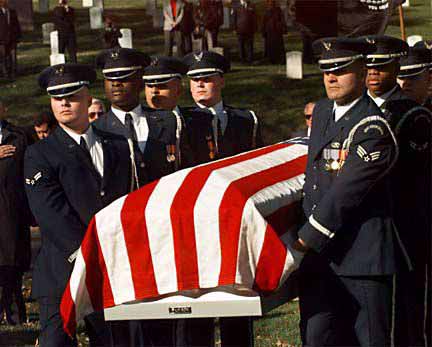
Thank you to each and every person who's had a hand in protecting the freedoms of Americans, the Vietnamese, the Koreans, the Iraqis. Those that rid the world from Hitler and Mussolini. The ones who died protecting southern culture, or fighting for the equality of all men.
Thank you.
Subscribe to:
Posts (Atom)


 Posts
Posts

