My school district, was nice enough to provide it's teachers with curriculum guides for Tuesday's historic innauguration.
So I'll simply share them with you: http://www.phila.k12.pa.us/offices/curriculum/supports/08-09/Inaug.htm



My school district, was nice enough to provide it's teachers with curriculum guides for Tuesday's historic innauguration.
So I'll simply share them with you: http://www.phila.k12.pa.us/offices/curriculum/supports/08-09/Inaug.htm

As educators and historians we can all appreciate a good timeline. Timelines are a great tool to use in the classroom to give the students perspective and an ability analyze dates and events in sequential order and it's a way that kids learn, without knowing they're learning. Try having thee kids make a timeline of important events in a chapter instead of answering questions at the end. I guarantee they'll be more engaged.
If you're lucky, you have a computer lab or a laptop cart where you can have the kids create timelines online, check off that technology quota and draw them in even more.
Here are several places to do that.
http://www.teach-nology.com/web_tools/materials/timelines/
http://www.readwritethink.org/materials/timeline/
You can find a plethora of timelines and links to timelines on my US History website: http://USHistorySite.com/timelines.php
But here's the timeline creator of all timelines - TimeRime.com:
This is not your typical timeline. TimeRime takes time lines to the next level by adding a level of interactivity with images, a scrolling feature and so much more which can't possibly be described. You'll just have to see it for yourself.
Though making a timeline with TimeRime could take a considerable amount of time, the results can be fantastic. Imagine the ideas you can bring to the table with pictures, and words with perspective of what came first, second and so on.
Below, I've embedded a timeline of Barrack Obama from TimeRime.com to give you a sense of some of the capabilities.
I think we can all agree that the modern day Christmas holiday is a far cry from the true meaning of celebration of the nativity. And though there are still many Americans who do celebrate the birth of Christ. Those that do break bread and un-wrap gifts with visions of wise man dancing in their heads, still have a lot owed to the minds behind the Americanization of Christmas.
Let's start with Santa Claus. The name Santa Claus is derived from St. Nicklaus. Nicholas lived sometime during the 3rd century in what is now the southern coast of Turkey. Nicholas was known for his generosity and his patronage to the poor, so the idea of Santa Claus is no stretch. And holidays celebrating St. Nicholas.
But what's the deal with the flying reindeer? And what's with the sneakiness through the chimney? These things, along with idea for Rudolph are pure 19th and 20th century American adaptations.
The image of the jolly old elf was developed from the 1823 poem "A Visit from St. Nicholas," better known now as "The Night Before Christmas." The poem's authorship has been disputed over the years, but what is truly remarkable is the imagination to turn St. Nick into a sleigh riding elf who used magical flying reindeer to descend onto the roofs of good girls and boys.
The 8 tiny reindeer were purely a product of the author's imagination. Regardless of whether the author is Clement C. Moore or Henry Livingston, millions of kids still check the weather reports and check the night sky to make sure Ol' St. Nick can get to their house safely.
Here's the vision of St. Nicholas from the poem.
"He was dressed all in fur, from his head to his foot,
And his clothes were all tarnished with ashes and soot;
A bundle of toys he had flung on his back,
And he looked like a peddler just opening his pack.
His eyes—how they twinkled! his dimples how merry!
His cheeks were like roses, his nose like a cherry!
His droll little mouth was drawn up like a bow,
And the beard of his chin was as white as the snow;
The stump of a pipe he held tight in his teeth,
And the smoke it encircled his head like a wreath;He had a broad face and a little round belly,
That shook, when he laughed like a bowlful of jelly.
He was chubby and plump, a right jolly old elf. . ."
But these were just words, the true look of Santa came from the famous political cartoonist, Thomas Nast. In 1863 Nast was commissioned to draw a series of annual drawings of the Santa Claus in Harper's Weekly. His drawings, based on the descriptions from the poem and an earlier Dutch representation of the character. The drawings continued through 1886 and helped to shape the Santa Claus we know and love today.
For a more robust story of the history of St. Nicholas, click on the link below. http://www.stnicholascenter.org/Brix?pageID=35
And then there's Rudolph. Believe it or not, Rudolph came to be as a marketing ploy to entice people to shop at Montgomery Ward. The departments store would release an annual coloring book as a gimmick to promote holiday shopping. In 1939, one of Montgomery Ward's copywriters, Robert L. May, came up with the idea for an ostracized reindeer with whom it would be easy to sympathize. The story was a hit, and thus a promotion to sell more toys has turned into an American holiday icon.
Even Snopes is on the great Rudolph caper: http://www.snopes.com/holidays/christmas/rudolph.asp
Leave it to the great United States to everything bigger, better and brighter!
If you've got some time, here's a pretty informational video about the History of Christmas.
The history of Santa starts at 28:26 into the video, and Rudolph starts at 34.56
-------------------------------
Further reading:
Santa Claus: A Biography
Nicholas: The Epic Journey from Saint to Santa Claus
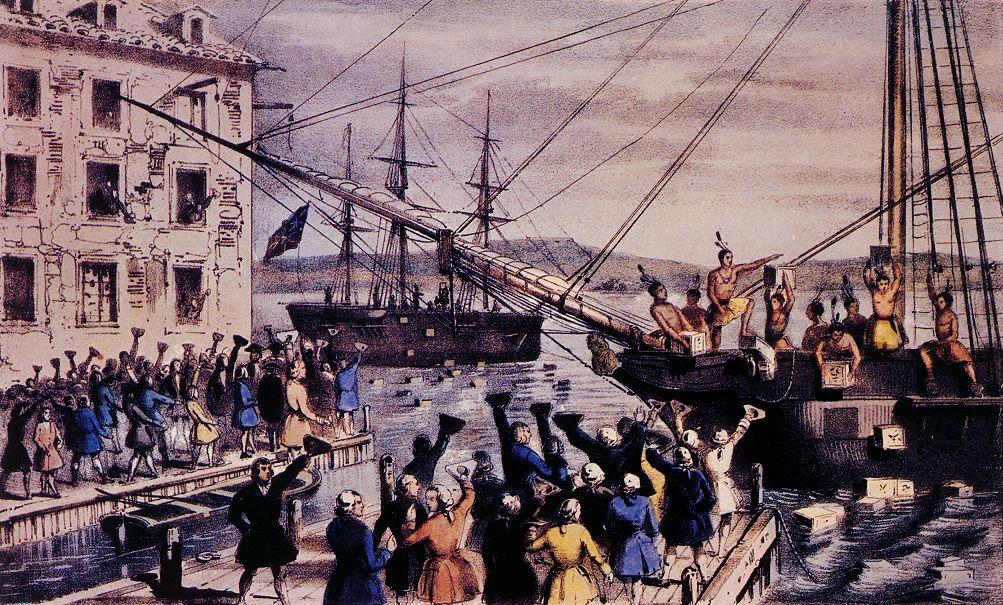 The 235th anniversary of the Boston Tea Party is set for December 16. To commemorate the event the National Constitution Center will unveil The Robinson Tea Chest.
Today's trying economic times is enough to make you rethink the direction of our education system and ponder the thought of what is most important in education?
Is it the ability to reduce algebraic equations? Is understanding the leadership qualities of Alexander the Great really that important? What about knowing all of the prepositions and understanding that you shouldn't end a sentence with one of them? Or better yet... how about the value of a dollar and how credit works?
Yep, that could undoubtedly help in times like these.
My first 2 years of teaching, I taught economics, in Atlanta, Georgia. It was a great class, and really engages the students because it is real life... and they knew that. I didn't take economics in high school. I don't even think it was offered. I teach now in Philadelphia, PA and I don't think economics is an option. But it should be.
It is a great thing to foster a young entrepreneur and let them hash out there ideas in a business plan. Young entrepreneurship is what is going to keep this company afloat. And with the advancement of technology, the next great entrepreneur could undoubtedly come from a 12th grade classroom.
Entrepreneurship is all around and the future of our country depends on it. Fortunately there are plenty of foundations out there that help to foster ideas by way of education, support and grants, and help any entrepreneur with taking an idea to fruition. One such place is the Ewing Marion Kauffman Foundation. (http://www.kauffman.org).
The Kauffman Foundation is dedicated to creating a society of economically sound individuals who can contribute positively to their community in the form of staring a business or understanding business from a broader perspective.
The Kauffman Foundation has plenty of free resources for teachers and students. Choose from newsletters, RSS feeds and fact sheets.. they're all free, so check 'em out here.
One of the current resources highlighted on the site discusses math, science and technology in the classroom and see how parents and students truly feel about the current curriculum being taught in school.
I know I'm upset that Pennsylvania doesn't teach Economics. I loved teaching the subject. I became certified in Business Technology which has some economics, just so I could teach when given the chance. But alas, apparently it's not important enough to include in the core curriculum. Entrepreneurship and simple economics should definitely be a priority in any district.
Young entrepreneurship is nothing to shy away from. If anybody knows of any other foundations, or grants out there to help bring economics into schools, please share them.

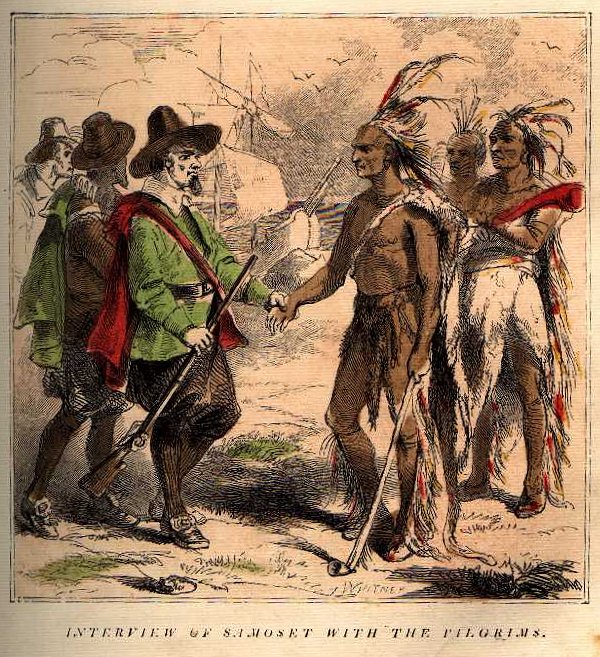
"Our harvest being gotten in, our governor sent four men on fowling, that so we might after a special manner rejoice together after we had gathered the fruit of
our labors. They four in one day killed as much fowl as, with a little help beside, served the company almost a week. At which time, among other recreations, we exercised our arms, many of the Indians coming amongst us, and among the rest their greatest king Massasoit, with some ninety men, whom for three days we entertained and feasted, and they went out and killed five deer, which they brought to the plantation and bestowed upon our governor, and upon the captain, and others. And although it be not always so plentiful as it was at this time with us, yet by the goodness of God, we are so far from want that we often wish you partakers of our plenty."

The book's interesting cover is enough to grab your attention. But the interest doesn't stop there. Failures of the Presidents is a quick witted, sarcastic, informative and entertaining look at some of the greatest Presidents' not so great moments.
If you've read this book, or anything like it, I'd love to hear your thoughts.... I'm currently reading Secret Lives of the US Presidents
Both books are in my recommended section in the USHistorySite Online Store... click here to see all my recommended items.

Dear Readers,
I'd like to take the time to thank all of my loyal readers. I have now hit the milestone of 100 readers. What does this mean? This means 100 people have decided that they like my blog enough to have it fed to them every time I decide to spoon it out. Thanks guys!
Incidentally, the 100th reader came on the 100th post. This is post #101. And although the red button below may not indicate 100 - it was at that number - it just sometimes fluctuates.
If you're interested in getting USHistoryBlog in your RSS feed, click the red button below.
Or if you want to get USHistoryBlog in your email, you can do that too...
Click here to subscribe to the email
I try my best to create quality, insightful commentary that can be enjoyed by both the lay-man and the expert. I do cater towards teachers and education a bit, but why not... I'm a teacher.
What started as a way to give my students an alternative to the same old homework assignment has turned into a hobby, and it appears like people enjoy my hobby. And I appreciate that.
USHistoryBlog.com has been around since October 29, 2006. Since that time, the blog has received over 42,000 site visits. 33,000 of those visits have come since January 1st of 2008. So the site is growing. So I'll keep doing what I do... and you can keep enjoy it.
What can you do?
For starters, you can spread the word... Tell people about the blog, send them a link, put a link on your website (I'll exchange with you if you'd like).
You can Friend USHistorySite/USHistoryBlog on Facebook, and become a fan of the site... This is a great way to connect and network with like-minded people. Click the image below to do that.
Comment more often. I love to get comments and hear the opinions of my readers. I'd love to hear from you about topic ideas and discussions. I do give prompts at the end of a lot of the entries, but just a few quick words will help out a lot.
And finally... you can simply keep doing what you've been doing. Read and enjoy the blog.
Thanks again.

We've all heard the phrase... the 11th hour of the 11th day of the 11th month of 1918, when Germany signed the Armistice, ending The Great War.
It was made a legal holiday in 1938.
Several years later, in 1953, a shopkeeper from Kansas, named Al King had the idea to honor all American veterans on Armistice day and not just those from World War I. King had been very active in supporting all veterans, with the group American War Dads. A congressman from his home town, liked the idea and pushed the idea through Congress. And in 1954, President Eisenhower signed it into law, making the 11th of November officially Veterans Day. A day to honor all veterans of every war.
If there are any veterans you'd like to salute and honor, here is your forum. Please comment below and honor our soldiers.
I'll honor my Grandfather, Joe Vetter, who served in the Army during World War II as an Ordinance Supply Technician. We're fortunate he didn't see any combat action, but he did share a boat with General Patton and was given clean-up duty on Omaha Beach several days after D-Day, in the European theater. I know he's spending today calling all of his army buddies. Unfortunately, each year he makes fewer and fewer phone calls.
He's written a few heartfelt entries on this blog. Here is his take on D-Day, and here are his thoughts on the GI Bill.
Grandpop, I love you and salute you. Thank you.
And finally, for more stories go to http://www.americanprofile.com/veterans/, a site dedicated to telling the stories of real American heroes.
In honor of Veteran's Day, ShopPBS is offering 15% off War & Military Titles PLUS Buy More Save More starts today.
 Momentarily, Barrack Obama has become the 44th President of the United States. Above that, he has become the first African-American President of the United States of America. A truly historic event in our nation's ever-unfolding history.
Congratulations to Barrack Obama and everything he represents.
I think the picture of Reverend Jesse Jackson crying is fitting. He has tears of joy, tears of relief, tears of excitement. Tears that reflect the hardships of Rosa Parks, Martin Luther King, Booker T. Washington, Jackie Robinson, Hank Aaron, The Little Rock Nine, Malcolm X, Crispus Attucks, Bill Cosby, Thurgood Marshall and so many others.
To sum up this long civil rights battle, I think Jay-Z said it best at a rally in Philadelphia yesterday...
"Rosa Parks sat so Martin Luther King could walk. Martin Luther King walked so Obama could run. Obama's running so we all can fly."
Barrack Obama will be sworn into office during the first month of 2009.
2009 marks the 100th Anniversary of the NAACP (National Association for the Advancement of Colored People).
Barrack Obama started his political career in Springfield, Illinois. Springfield, Illinois is the birthplace of the NAACP.
Tonight the United States took a giant step forward. It's one step towards change. Towards a friendlier, well respected United States. Get ready for America 2.0.

Happy Election Day!
"The future of this republic is in the hands of the American voter." - Dwight Eisenhower
"The ignorance of one voter in a democracy impairs the security of all."- JFK

The National Constitution Center

 Posts
All Comments


