


 A colleague of mine sent me this link to an article a few weeks ago. It's a series of songs saluting Abraham Lincoln. The collection of mostly Civil War-era songs, includes "Dixie" and "Battle Cry of Freedom", entitled "Abraham Lincoln in Song".
Singer/songwriter Chris Vallillo says that "Lovers of acoustic music, history buffs and especially the educational audience". Valillo, who is from Illinois has studied Lincoln's life and Illinois folk traditions. The album seems like a natural progression. A link to his website is below.
http://www.ginridge.com/
The album was released on Lincoln's birthday, February 12, and can entertain and educate. If you're studying the Civil War, I might recommend playing this album as the kids are entering the room. Have them listen to the music and the lyrics and give them a journal entry, or a sponge, or whatever you're calling it these days asking them to write about the songs and the music.
Play "Battle Cry of Freedom," which was inspired by Lincoln's call for Union volunteers to join the Army.
Challenge the students to try and recognize the melody of "Aura Lee." Written in the 1860s, it is the melody for Elvis Presley's "Love Me Tender." There are songs about Lincoln's funeral train and a runaway slave. On a side note, "Dixie" is said to be Lincoln's favorite. Valillo says it was played by the White House Band the day peace was declared as a way to inform the crowds of the news.
Just opening the conversation to music is a good way to make the lesson more authentic by asking them what their favorite artists are writing about and what messages they're trying to convey. Music is a universal language.
As a teacher I've used music in my classroom on various occasions.
Billy Joel's "We Didn't Start the Fire" was a good way to teach the modern era of American history by challenging the students to learn all of the people, places and events that are highlighted in the song. I followed that by having them come up with their own verse of what has happened during their lifetime. Which was approximately 1990 - 2007, which worked well because Billy Joel's song went to 1989. Click here to see a video highlighting the song's events and read the comments left by my students.
I used the Beatles's "Revolution" to start a dialogue on what exactly is a revolution, and what message were Lennon and McCartney trying to convey? This works well in civics and American history. And everybody likes the Beatles. Bob Dylan's 'Blowin' In the Wind'

I used Garth Brooks' "Belleau Wood", which is about the World War I Christmas truce on the Western Front in 1914 during a World War 1 unit. It was cool when all the students started to sing along. For the lyrics to this song, click here. (It's not 100% historically accurate, but a good starting point to understand the human factor of war). You can buy the album here.
And of course, I've used a few songs from the famous School House Rocks collection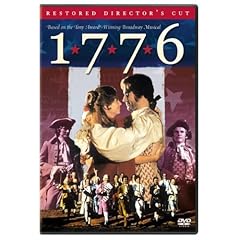 And I'm sure this counts as music, but the movie '1776'
And there are dozens of other ideas I've had about using music in the classroom. I would love to hear more ideas. And I know that people read this blog, my statistics tell me so... so please leave a comment and share your thoughts.
Showing posts with label Henry David Thoreau. Show all posts
Showing posts with label Henry David Thoreau. Show all posts
Saturday, March 01, 2008
Abraham Lincoln in Song


Friday, March 30, 2007
1848: America's Coming Out Party...
In last week's TIME magazine there was an article written by novelist Kurt Andersen which discusses America in the late 1840s, particularly in 1848.
Andersen writes that the United States was "coming of age" in 1848 where miraculous transformation in all facets of human life occurred improving the way in which people lived. In January of 1848, gold was discovered in Northern California. The Gold Rush was upon us and stories of fortunes and failure would become a part of the "American Way".
The beginning of February brought the end of the Mexican War, which extended the United States from Texas all the way to the Pacific. That's a pretty big chunk.
Meanwhile in London, a German Philosopher would frown upon the petty American citizens and their belief of the "bizarre phenomenon" of striking it rich. Karl Marx and his buddy Friedrich Engels were published The Communist Manifesto, causing riots in Europe. Marx and Engels believed that getting rich from gold was something that "was not provided for in the Manifesto" because the philosophy does not believe in the creation of "large new markets out of nothing". Think again gentlemen!
California's Gold Rush turned San Francisco into the largest city west of Chicago. This due in large part to the prospect of fortune.
There were several improvements of speed in 1848. The first being the telegraph. 1848 marked the first year that country was wired. From Boston to New York City to Washington to Chicago and New Orleans, the country could communicate much faster than it could before. What used to take weeks and then days, would now only take seconds. The world was now much smaller.
There were several improvements of speed in 1848. The first being the telegraph. 1848 marked the first year that country was wired. From Boston to New York City to Washington to Chicago and New Orleans, the country could communicate much faster than it could before. What used to take weeks and then days, would now only take seconds. The world was now much smaller.
The same year, in upstate New York, an unprecedented gathering of women demanded suffrage and women's rights.
With the increased speed of the printing presses, newspapers were popping up all over the country and truly came of age in the late 1840s. The Associated Press was formed in 1846.
Andersen claims that "railroad mania" really took flight in the late 1840s. Four times as much railroad track was laid than in 1847.
It was also the late 1840s when Pioneers began their trek across the wilderness in search of a better life.
 The 1840s also saw the first department store, the first 'national brand', and the first presidential campaigns. "Tippecanoe and Tyler too!!" Forget the selling of Richard Nixon as president. The US was suckered into electing William Henry Harrison. The Whigs remade Harrison into a great war hero, though he was nothing more than a boring, uninspired military leader. (see the poster on the left)
With an expanded voting base, both parties, the Whigs and the Democrats were prepared to appeal to these new masses and set out on national campaign efforts. Eighty Percent more people voted in this election then in the previous one. The election of 1836 had 1,503,534 total votes, while 1840 had 2,411,808 total votes. William Harrison had nearly as many votes in 1840, 1,275,390, as the entire candidate pool from 1836.
Andersen claims that 1848 saw the country's first theatrical "mega hit", A Glance at New York, which featured dialogue spoken in the vernacular sense. But let's be honest, this came into vogue in the Renaissance as well and was nothing new.
Andersen claims that 1848 saw the country's first theatrical "mega hit", A Glance at New York, which featured dialogue spoken in the vernacular sense. But let's be honest, this came into vogue in the Renaissance as well and was nothing new.
The main fan base of these shows were the heart and soul of the mean streets of the city, forming the first American youth sub-culture. These "Bowery Boys and Girls" were foulmouthed and rambunctious, and according to Andersen, enjoyed physical violence. A precursor to today's youth hip-hop culture.
The article continues in stating that PT Barnum began his traveling show in the late 1840s and such authors as Walt Whitman and Nathanial Hawthorne began their work on the classics Leaves of Grass and The Scarlet Letter respectively. Though I always associated this work by Whitman with the Civil War.
Henry David Thoreau's On Walden Pond experience began in the late 1840s... on this same note, Andersen fails to mention that environmentalist, naturalist, preservationist and writer John Muir journeyed across the Atlantic from Scotland in 1848.
 Muir who's works are still read to this day, later founded the Sierra Club. He befriended Teddy Roosevelt in the early 1900s and convinced him that the parks were being mismanaged by the states and the misuse of resources and urged Roosevelt to do something about it. A 'woodsy' guy himself Roosevelt went on to establish the nation's first national bird reserve, which eventually became the Wildlife Refuge System. Roosevelt also charged congress with creating the United States Forrest Service. (Muir and Roosevelt are pictured to the right)
Roosevelt set aside more land for national parks and nature preserves than all of his predecessors combined, 194 million acres. In all, by 1909, the Roosevelt administration had created an unprecedented 42 million acres of national forests, 53 national wildlife refuges and 18 areas of "special interest", including the Grand Canyon.
Perhaps, modern thought, modern communication, modern transportation and modern American life did begin in the late 1840s. It was time unequalled in its aggressiveness towards speed, change and modernity.
Though the some, like Walden, distanced themselves from it. And many still today try to follow in his footsteps to find a balance. If this is you... I suggest reading the works of Thoreau as well as John Muir, it truly is an enlightening, relaxing experience that takes you away from whatever stresses you have.
Subscribe to:
Posts (Atom)

 Posts

