


With the 150th anniversary of the Civil War fast approaching, it is probably time you brushed up on your Civil War history. If you're in need of a refresher on the topic or have never ventured into the Civil War era, The Civil War: A Concise History
Author Louis P. Masur begins with the causes of the conflict and continues year by year covering major political, social events of the time. Not to mention the military events, battles and important characters of the war.
The book
How the war changed from an effort to restore Union towards an all-out war that would change the fundamental existence of the Southern society. And how the war changed to become a battle to abolish slavery.
Masur continues in the aftermath of the war, including post-war policy and reconstruction. It's a good introduction into this very complicated era of American history.
The Civil War: A Concise History
Showing posts with label Civil War. Show all posts
Showing posts with label Civil War. Show all posts
Wednesday, January 26, 2011
The Civil War - A Concise History - Book Review


Monday, August 16, 2010
For Love of LIberty - The Story of America's Black Patriots
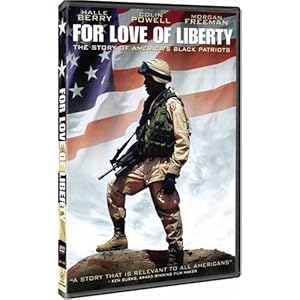 Introduced by Colin Powell, hosted on-camera by Halle Berry and narrated by Avery Brooks, For Love of Liberty uses letters, diaries, speeches, journalistic accounts, historical text and military records to document and acknowledge the sacrifices and accomplishments of African-American service men and women.
The story spans the Revolution to today and examines why, despite enormous injustice, these heroic men and women fought so valiantly for freedoms they themselves did not enjoy.
The project's goal is to raise public consciousness and shed light on an extraordinary and relatively unexplored aspect of our nation's history. The central theme of the initiative, the price of liberty, is relevant to all Americans.
_________________________________________
Here are the links to For Love of Liberty web site:
http://www.forloveofliberty.net - Watch videos, read stories/bios, and check out an awesome timeline of US Wars
http://forloveofliberty.com - This site is all about the documentary. See images from the film, meet the cast and purchase the video.
_________________________________________
Here are facilitators guide for both High School and College...
http://ushistorysite.com/documents/FLOL_HS_Guide.pdf
http://ushistorysite.com/documents/FLOL_College_Guide.pdf
_________________________________________After September 30, 2010, the site will no longer be active due to funding issues by the Army. In an effort to distribute the materials before the site goes away... please send this to friends, colleagues and veterans. Below are the links to download the documentary. (Or you can buy it...)
For Love of Liberty Documentary Links:
Chapter 1: Introduction - http://www.megaupload.com/?d=
Chapter 2: The Revolution - http://www.megaupload.com/?d=
Chapter 3: The Civil War - http://www.megaupload.com/?d=
Chapter 4: WWI - http://www.megaupload.com/?d=
Chapter 5: WWII - http://www.megaupload.com/?d=
Chapter 6: The Korean War - http://www.megaupload.com/?d=
Chapter 7: The Vietnam War - http://www.megaupload.com/?d=
Chapter 8: The Middle East - http://www.megaupload.com/?d=
Chapter 9: Conclusion - http://www.megaupload.com/?d=
Play All: - http://www.megaupload.com/?d=
Wednesday, May 20, 2009
Favorite American Quote Winner
Several weeks ago I asked my readers to contribute their favorite quote from American history. I promised I'd choose my favorite from the list and highlight it in a future post. This... is that future post.
I'd first like to thank those of you that contributed. We had about ten participants and about 15 submissions.
My favorite of the bunch was from the anonymous contributor 'boldlygo', who submitted a great Abraham Lincoln quote from a letter Lincoln wrote to Union General George McClellan.
"If you don't want to use the army, I should like to borrow it for a while."That said, here's a little history of that quote...
Lincoln, was known as a micro-manager. During the war he could hardly keep still and was constantly getting his hands dirty in the details of the war. According to Doris Kearns Goodwin, Author of Team of Rivals: The Political Genius of Lincoln, Lincoln would often "get himself to the battlefield to visit the soldiers, walk amidst their ranks, [and] see the wounded in the hospital."
The picture to the left is a great example of Lincoln's "Management by Walking Around" concept. A strategy still used today by many managers and supervisors.
Lincoln wanted to win the war quickly, and was no longer willing to accept McClellan’s belief that the Union Army "should take their time and use extra precaution". An interview found in Spartacus, in March of 1863, Lincoln said:
I directed McClellan peremptorily to move on Richmond. It was eleven days before he crossed his first man over the Potomac; it was eleven days after that before he crossed the last man. Thus he was twenty-two days in passing the river at a much easier and more practicable ford than that where Lee crossed his entire army between dark one night and daylight the next morning. That was the last grain of sand which broke the camel’s back. I relieved McClellan at once.
Lincoln soon replaced McClellan with Ambrose Burnside. Lincoln would go on to relieve several more Union leaders until finally settling on Ulysses S. Grant to finish the war.
Other Works cited:
http://www.pabook.libraries.psu.edu/palitmap/bios/McClellan__George_B.html
http://books.google.com/books?id=qbefJcN89sIC&printsec=frontcover

Wednesday, April 15, 2009
On This Day: April 15, 1861 - Civil War Begins
The following post was submitted by USHistoryBlog contributor Tom Haynes.
On this day, the Civil War officially began. In response to southern forces firing on Fort Sumter three days prior, President Abraham Lincoln declares a state of insurrection and calls out Union troops.
In the resolution issued this day, Lincoln called 75,000 militia troops from the various states still loyal. At this point, seven states had announced their intention to secede from that Union. South Carolina had been first, followed by Mississippi, Florida, Alabama, Georgia, Louisiana, and Texas. The militia's first duty, according to Lincoln's statement, would be to secure federal property seized by those states.
At the same time, Lincoln called both houses of Congress into session, scheduled for the 4th of July 1861. This period would be something of a lull in hostilities, but several more states (most notably Virginia) would quickly respond to Lincoln's call for troops by joining the secession movement.
Whereas the laws of the United States have been for some time past, and now are opposed, and the execution thereof obstructed, in the States of South Carolina, Georgia, Alabama, Florida, Mississippi, Louisiana and Texas, by combinations too powerful to be suppressed by the ordinary course of judicial proceedings, or by the powers vested in the Marshals by law.
Now therefore, I, Abraham Lincoln, President of the United States, in virtue of the
power in me vested by the Constitution, and the laws, have thought fit to call forth, and hereby do call forth, the militia of the several States of the Union, to the aggregate number of seventy-five thousand, in order to suppress said combinations, and to cause the laws to be duly executed. The details, for this object, will be immediately communicated to the State authorities through the War Department.I appeal to all loyal citizens to favor, facilitate and aid this effort to maintain the honor, the integrity, and the existence of our National Union, and the perpetuity of popular government; and to redress wrongs already long enough endured.
I deem it proper to say that the first service assigned to the forces hereby called forth will probably be to re-possess the forts, places, and property which have been seized from the Union; and in every event, the utmost care will be observed, consistently with the objects aforesaid, to avoid any devastation, any destruction of, or interference with, property, or any disturbance of peaceful citizens in any part of the country.
And I hereby command the persons composing the combinations aforesaid to disperse, and retire peaceably to their respective abodes within twenty days
from this date. Deeming that the present condition of public affairs presents an extraordinary occasion, I do hereby, in virtue of the power in me vested by the Constitution, convene both Houses of Congress. Senators and Representatives are therefore summoned to assemble at their respective chambers, at 12 o'clock, noon, on Thursday, the fourth day of July, next, then and there to consider and determine, such measures, as, in their wisdom, the public safety, and interest may seem to demand.In Witness Whereof I have hereunto set my hand, and caused the Seal of the United States to be affixed. Done at the city of Washington this fifteenth day of April in the year of our Lord One thousand, Eight hundred and Sixtyone, and of the Independence the United States the Eightyfifth.
ABRAHAM LINCOLNBy the President:
WILLIAM H. SEWARD, Secretary of State.
Friday, May 16, 2008
US History in Song
I found this song a few months ago when spending some time on YouTube.
The song, US History, by Flipsyde is a representation of the history of the United States as seen through the eyes of a personified America.
After discovering this song, I decided to check out a few more songs by Flipsyde. What I found was inspiring. Their songs are inspirational, educational, relevant and all send a positive message.
For teachers looking to use this song in class, I do recommend it, but be aware of the language. You might want to run this by the powers that be, or just be sure that your class is mature enough to except the song for what you're using it for... a history lesson.
I apologize in advance if the language offends anyone. It is for educational purposes.
It's got references to the mistreatment of Native Americans, The Revolution, The Civil War and slavery, imperialism, Teddy Roosevelt, The World Wars, including Pearl Harbor and the Atom bomb, Vietnam, the Cold War, Korean War, War in Iraq, etc... etc...
It really is impressive when you look at it from the standpoint of simplifying complex ideas and relationships in US History. If I were teaching US History right now... I'd use it.
Watch the video... then listen to the song again and read the lyrics. And tell me what you think...
US History - by Flipsyde
Hustlin's in my blood my father's name is Britain
His history consisted of robbery killin' and pimpin
Filthy rich and the biggest killer that you ever seen
Once I'm older I'm takin' over I'ma be king
I was locked up in jail when he got the new land
Opened his cells I guess that's how the story began
First mission was to clear it out and claim it as mine
Indigenous people were peaceful it took no time
Great grandmother Africa was blind and disabled
Sons was traitors we played divide and conquer invaded
Sold her children into slavery and profited quick
Started makin' side deals and that's how I got rich
Daddy Britain found out and tried to put me in check
He don't understand I'm a man and I deserve some respect
Tried to bring it to me but I play for keeps and I won
Still my daddy but you ain't the only man with a gun
More money More problems little brother is wild
They call 'em The South he's country with a big ass mouth
Tried to show 'em new business but he don't wanna change
I love 'em but I knew eventually I'd blow out his brains
I'm America!
You know you know God Bless America
You know you know God Bless America
You know you know God Bless
Me and my daddy still cool and my uncles is with us
France Russia and Italy and we all killas
But it's this nigga named Germany that's out of control
Rollin with Japan and Turkey and them niggas is bold
Started fuckin' with my uncles and we all went to war
Uncle France damn near died at the tip of his sword
When the smoke cleared we won let 'em retreat
Shoulda' killed 'em cause they knew they had us close to defeat
Kicked it off again 20 years later it was on
This time my uncle Italy traded and he was gone
I was neutral when Japan hit me guess that he knew
I aint gone' let my family fight without me jumpin' in too
Woulda' lost if I didn't hit Germany's weapon supply
Kamikaze Japanese was always ready to die
Dropped atomic bomb let them niggas know that it's real
Speak soft with a big stick do what I say or be killed
I'm America!
You know you know God Bless America
You know you know God Bless America
You know you know God Bless
I'm racin' with my uncle Russia we the ones with the guns
He supported the North so I rolled with South Vietnam
Thought it would be easy but almost 60 thousand died
They was harder than Korea so we ran for our lives
It's a family called the Middle East and they got bread
Sellin' oil they don't cut me in then off with their head
I got a nephew named Israel that's right in the middle
Pay his allowance as long as he can dance to my fiddle
I had a partna' named Iraq gave 'em weapons and money
Nigga started getting' power and he start actin' funny
Saudi Arabia's cool gotta son Bin Laden
I was trainin' his soldiers to go against the Russians and stop 'em
Then he tried to say I need to take my soldiers and cut
Gave 'em the finger that's when he flipped and blew my shit up
I took it to 'em, and then I took it back to Iraq
and if you ain't my blood brother you gonna be flat on yo' back
The sons of Africa just invented this shit called rap
Tellin' my secrets that's why I'm puttin' their heads on flat
Built an empire quick and it might not last
But I bet I go down in history as the one that smashed
I'm America!
You know you know God Bless America
You know you know God Bless America
You know you know God Bless
Hustlin's in my blood my father's name is Britain
Hustlin's in my blood my father's name is Britain
The red the white the red the white the blue
The red the white the red the white the blue
Saturday, April 26, 2008
Ulysses S. Grant Born... and Born Again...
On April 27 1822, famed Civil War General and 18th President of the United States Ulysses S. Grant was born.
Grant, better known for his prowess on the battlefield as opposed to his leadership in office is a neat character. He quickly rose his way to the top of the Union Army after having sat "fallow" for some time before the war.
Fallow -- land, plowed and left unseeded for a season or more; uncultivated; not in use.
After some action in the Mexican-American(1846-1848) War and preceding the Civil War (1861), Grant sat "fallow" for several years while trying his hand at farming. He failed. In fact, he tried many different occupations and wasn't good at any of them.
This is what makes his quick rise in to leadership with the Union Army so interesting. With very little military leadership training, Grant simply won battle after battle. His secret was simple. Other leaders spent much of their time trying to outsmart their counterpart, worrying what the other would do. Not Grant. Grant didn't worry about his opposition and simply did what he thought was best. He didn't care what his opponent was doing. It seemed to work.
After serving as President, Grant died a poor man. His last years were spent writing his memoirs, of which he never saw a penny. Though his surviving wife was able to profit from his writings.
 In 2004, US Grant was born again. April 26, 2004 the United States introduced the new colored $50 bill. The new design was put in place to deter counterfeiters. It was the first design change for the fifty since 1997.
Fun Facts:
In 2005, US Representative John Kline introduced legislation to replace Grant's image on the $50 bill with an image of President Ronald Reagan.
Grant had owned one slave whom he set free in 1859.
Saturday, March 01, 2008
Abraham Lincoln in Song
 A colleague of mine sent me this link to an article a few weeks ago. It's a series of songs saluting Abraham Lincoln. The collection of mostly Civil War-era songs, includes "Dixie" and "Battle Cry of Freedom", entitled "Abraham Lincoln in Song".
Singer/songwriter Chris Vallillo says that "Lovers of acoustic music, history buffs and especially the educational audience". Valillo, who is from Illinois has studied Lincoln's life and Illinois folk traditions. The album seems like a natural progression. A link to his website is below.
http://www.ginridge.com/
The album was released on Lincoln's birthday, February 12, and can entertain and educate. If you're studying the Civil War, I might recommend playing this album as the kids are entering the room. Have them listen to the music and the lyrics and give them a journal entry, or a sponge, or whatever you're calling it these days asking them to write about the songs and the music.
Play "Battle Cry of Freedom," which was inspired by Lincoln's call for Union volunteers to join the Army.
Challenge the students to try and recognize the melody of "Aura Lee." Written in the 1860s, it is the melody for Elvis Presley's "Love Me Tender." There are songs about Lincoln's funeral train and a runaway slave. On a side note, "Dixie" is said to be Lincoln's favorite. Valillo says it was played by the White House Band the day peace was declared as a way to inform the crowds of the news.
Just opening the conversation to music is a good way to make the lesson more authentic by asking them what their favorite artists are writing about and what messages they're trying to convey. Music is a universal language.
As a teacher I've used music in my classroom on various occasions.
Billy Joel's "We Didn't Start the Fire" was a good way to teach the modern era of American history by challenging the students to learn all of the people, places and events that are highlighted in the song. I followed that by having them come up with their own verse of what has happened during their lifetime. Which was approximately 1990 - 2007, which worked well because Billy Joel's song went to 1989. Click here to see a video highlighting the song's events and read the comments left by my students.
I used the Beatles's "Revolution" to start a dialogue on what exactly is a revolution, and what message were Lennon and McCartney trying to convey? This works well in civics and American history. And everybody likes the Beatles. Bob Dylan's 'Blowin' In the Wind'
I used Garth Brooks' "Belleau Wood", which is about the World War I Christmas truce on the Western Front in 1914 during a World War 1 unit. It was cool when all the students started to sing along. For the lyrics to this song, click here. (It's not 100% historically accurate, but a good starting point to understand the human factor of war). You can buy the album here.
And of course, I've used a few songs from the famous School House Rocks collection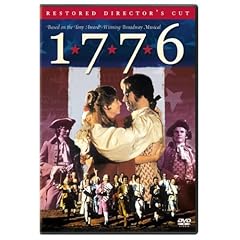 And I'm sure this counts as music, but the movie '1776'
And there are dozens of other ideas I've had about using music in the classroom. I would love to hear more ideas. And I know that people read this blog, my statistics tell me so... so please leave a comment and share your thoughts.
Monday, November 19, 2007
The Gettysburg Address - November 19,1863
 On this day, 144 years ago, approximately 6 weeks after 7,500 men died in a 3 day battle, 1 man, bellowed 10 sentences and 272 words in 3 minutes. Little did he know that this short speech would eventually become the most quoted speech in United States history. And for good reason.
The speech rang true with many, even to this day as establishing "a new birth of freedom". It was a speech that would bring equality to all citizens, and create a unified nation where the rights of the states were no longer dominant. This man declared a government of the people, by the people, and for the people.
What many probably don't know is that this speech almost didn't happen. The Abraham Lincoln Blog has a pretty cool primary document of a letter addressed to Lincoln asking him for "A Few Appropriate Marks", leaving Edward Everett, a popular orator of the time to be the main attraction.
Funny to think that the President of the United States was playing second fiddle and received the invitation less than 3 weeks before the scheduled event. The Abraham Lincoln Blog has the full text of the letter. (thanks for bringing this to our attention)
And without further ado ... Abraham Lincoln's "Gettysburg Address", November 19, 1863
"Four score and seven years ago our fathers brought forth on this continent a new nation, conceived in Liberty, and dedicated to the proposition that all men are created equal.PS - A new photo of Abraham Lincoln at the Gettysburg memorial ceremony was found. It is the first such discovery since 1952. Here is the link...
Now we are engaged in a great civil war, testing whether that nation, or any nation, so conceived and so dedicated, can long endure. We are met on a great battle-field of that war. We have come to dedicate a portion of that field, as a final resting place for those who here gave their lives that that nation might live. It is altogether fitting and proper that we should do this.
But, in a larger sense, we can not dedicate—we can not consecrate—we can not hallow—this ground. The brave men, living and dead, who struggled here, have consecrated it, far above our poor power to add or detract. The world will little note, nor long remember what we say here, but it can never forget what they did here. It is for us the living, rather, to be dedicated here to the unfinished work which they who fought here have thus far so nobly advanced. It is rather for us to be here dedicated to the great task remaining before us — that from these honored dead we take increased devotion to that cause for which they gave the last full measure of devotion — that we here highly resolve that these dead shall not have died in vain — that this nation, under God, shall have a new birth of freedom — and that government of the people, by the people, for the people, shall not perish from the earth."
Wednesday, May 23, 2007
Lincoln On Leadership: Circulate Amongst the Troops
 I'm in the process of reading a pretty good book for executives and historians alike. It discusses executive strategies in leadership using Abraham Lincoln's approach. You'll learn a lot about the person underneath the Stovepipe hat and even more about the person reading the book (Yes, you!)
The first chapter's advice is to " Get out of the Office and Circulate among the Troops".
Lincoln surely did this. Often times Lincoln would be found with the troops, riding his horse through the ranks, amidst a background of cheers and applause. Lincoln found that casual contacts with "subordinates" was as important as formal meetings. He believed that people would feel less intimidated and be more open when in a relaxing atmosphere, as opposed to closed up in a meeting room.
Lincoln was known for motivating the troops by telling them his long term vision of the United States. From this, the troops would see the big picture and understand their role in that picture. Giving someone a sense of importance is a motivating factor which is very effective.
The picture to the right shows Lincoln who came to Antietam after the Battle of Bull Run to fire General McClellan. The picture shows Lincoln amongst the troops after the battle. Surely, Lincoln could have fired McLellan via telegram. But Lincoln is a stand up guy and probably used this as a way not to show panic amongst the troops.
 The picture to the left is Lincoln talking to McClellan.
To this note, it is well known that Lincoln changed Civil War generals several times before sticking with U.S. Grant. Some say Lincoln was too involved in the decisions of the war, or that he was micromanaging. The fact remains, he did what needed to be done to keep the Union together. This could be an entirely new entry, so I'll leave it at that.
Honest Abe had an open door policy and would rarely turn anyone away. According to some observers he would spend 3/4 of his time out of the office taking what Lincoln referred to as "public opinion baths". Literally bathing himself in the thoughts of the common man. Lincoln himself said, "I have little time to read the papers and gather public opinion that way... as a whole [it] is renovating and invigorating."
Obviously, in this day and age, it is a lot harder for a president to 'circulate' amongst the common man without causing chaos. Lincoln would often refuse protection and was comfortable with his ability to relate to everyone. His amiability was one of his best qualities. A quality which allowed him to gain trust from the common man. He was self-deprecating in social settings, in such a way where his stories, would keep people entertained, but at his own expense. This, might be a result of his melancholy and a way to hide his true feelings of depression. Regardless, he was very like-able in these situations.
During the War, Lincoln could usually be found sitting next to the telegraph machine waiting for the latest battle update. This, instead of waiting across the street in his office for a messenger to deliver the news. This strategy, of looking over the decoder's shoulder, allowed Lincoln to read the telegram quickly, and immediately write a response to be quickly relayed back to the appropriate party. It allowed him to make quick decisions, something that is vital in times of war.
Future leaders can learn from Lincoln's example of getting wide acceptance of a philosophy by demonstrating it in your everyday actions. By entering your subordinate's environment, you establish a frequent human contact which develops a sense of commitment and community. With this comes trust and access to vital information that might otherwise be spread behind your back.
There is no question that Lincoln's style was effective.
PS - The book is: Lincoln on Leadership: Executive Strategies for Tough Times. It is a quick read which gives you great insight into how Lincoln operated.
. It is a quick read which gives you great insight into how Lincoln operated.
Thursday, February 22, 2007
Cherokee People?
 On February 21, 1828, the first issue of the Cherokee Phoenix was printed, both in English and in the newly invented Cherokee alphabet.
This is especially newsworthy today based on the fact that NPR reported that a federal court hearing has Native Americans arguing against the descendants of African slaves once kept by Cherokee tribal members. The Cherokee Nation has moved to expel the people known as Cherokee Freedmen.
The Freedmen argue that a 140-year-old treaty protects their citizenship in the Cherokee Nation. Which puts the tribal member in a tight spot trying to argue against a long standing treaty.
The Cherokee was always one of the largest and wealthiest of all native american tribes. Many were landowners and owned up to 100 african slaves. It was these slaves who were granted citizenship when there names were included on a federal government list of all Cherokee citizen's called the "Dawes Roll".
The ancestors of these slaves are now arguing that they should be included in the Cherokee nation and are only being excluded because of the color of their skin.
The Cherokee argue that "It's an Indian thing, we do not want non-Indians in the tribe, our Indian blood is what binds us together".
It was after fighting for the losing side in the Civil War that the Cherokees decided to grant their newly freed slaves citizenship in the tribe. The Cherokee Freedmen believe that they helped sustain Cherokee life as much as an 'original' tribe member and deserve to be part of the Cherokee Nation.
I guess the courts will have to decide.
Sunday, January 28, 2007
Henry Clay... our Greatest Senator.

Henry Clay, like the Buffalo Bills was at the doorstep of greatness several times, and each time the result was undesirable. Henry Clay ran for president on 5 separate occasions. He won his party's nomination several times making to the 'big dance' only to be outdone by another party's candidate.
Though he never officially led our country, Henry Clay did great things representing Kentucky in both the House and Senate. Clay was known as The Great Compromiser, because of success brokering the issue of slavery several times.
First, was the Compromise of 1820, more commonly referred to as the Missouri Compromise. At this time, the balane between Free and Slave states was even at eleven a piece. Missouri wanted to come in as a free state, but the northern statesmen weren't going to have it. In a nutshell, the Missouri Compromise brought in Maine as a free state and Missouri as a slave state, maintaining the balance in the Senate. Additionally, slavery was now forbidden north of the 36-30 latitude line, which is essentially the northern border of Arkansas.
This negotiation staved off the inevitable Civil War for the time being.
Thirty years later, Clay would be called on again, this time coerced out of a short retirement to debate the issue of slavery once more. A similar situation had occurred. Senate wanted to keep the balance of Slave vs. Free state, but wasn't sure what to do with the newly acquired land which came as a result of the Mexican
American War. The Compromise of 1850 was born. This plan allowed slavery in the New Mexico and Utah territories while admitting California to the Union as a free state. It also included a new Fugitive Slave Act and banned the slave trade (but not slavery itself) in the District of Columbia. Many thought the banning of the slave trade in DC would lead others to follow suit. Banning the slave trade, and not slavery itself would allow the current slave owners to continue using slaves, but leaving them to rely on their current slaves' offspring to carry on the work.
The Compromise of 1850, again, helped to delay the Civil War for an additional eleven years.
Obviously, Henry Clay has some influence in the political arena and was highly respected. If her were alive today, might he be a moderate democrat, willing to cross party lines to get things done?
He was forward thinking enough to start the Whig Party, essentially the first 'second party'.
The American System kind of falls under the realm of 'crossing party lines'. The Amrerican System was Henry Clay's economic plan to make the United States self sufficient. In order for this to work, the North would have to cooperate with the South and vice-versa. It was an effort to rely less on British manufacturers and more on the industry located on the eastern seaboard. It called for improvements in roads and canals, to aid in shipping goods to the newly developing western states. It also suggested a national bank, something Alexander Hamilton had been advocating for many years. However, increased tension between the North and South, eventually led to the demise of this plan.
But again, it shows the strategic mind of Henry Clay who wanted nothing more than a peaceful and cooperative united states. Clay passed away in 1852 unaware that despite all his efforts, the slavery issue became too much and the strife between the states came to a head with the inevitable Civil War.
Even so, Henry Clay deserves more credit for his efforts.
PS - A Senate committee, headed by John F. Kennedy in 1957, was assigned the task of assessing and honoring his past members. This committee declared that Henry Clay was the greatest Senator in the history of this body.
And finally, here's an article comparing Clay to John McCain.
Though he never officially led our country, Henry Clay did great things representing Kentucky in both the House and Senate. Clay was known as The Great Compromiser, because of success brokering the issue of slavery several times.
First, was the Compromise of 1820, more commonly referred to as the Missouri Compromise. At this time, the balane between Free and Slave states was even at eleven a piece. Missouri wanted to come in as a free state, but the northern statesmen weren't going to have it. In a nutshell, the Missouri Compromise brought in Maine as a free state and Missouri as a slave state, maintaining the balance in the Senate. Additionally, slavery was now forbidden north of the 36-30 latitude line, which is essentially the northern border of Arkansas.
This negotiation staved off the inevitable Civil War for the time being.
Thirty years later, Clay would be called on again, this time coerced out of a short retirement to debate the issue of slavery once more. A similar situation had occurred. Senate wanted to keep the balance of Slave vs. Free state, but wasn't sure what to do with the newly acquired land which came as a result of the Mexican
American War. The Compromise of 1850 was born. This plan allowed slavery in the New Mexico and Utah territories while admitting California to the Union as a free state. It also included a new Fugitive Slave Act and banned the slave trade (but not slavery itself) in the District of Columbia. Many thought the banning of the slave trade in DC would lead others to follow suit. Banning the slave trade, and not slavery itself would allow the current slave owners to continue using slaves, but leaving them to rely on their current slaves' offspring to carry on the work.
The Compromise of 1850, again, helped to delay the Civil War for an additional eleven years.
Obviously, Henry Clay has some influence in the political arena and was highly respected. If her were alive today, might he be a moderate democrat, willing to cross party lines to get things done?
He was forward thinking enough to start the Whig Party, essentially the first 'second party'.
The American System kind of falls under the realm of 'crossing party lines'. The Amrerican System was Henry Clay's economic plan to make the United States self sufficient. In order for this to work, the North would have to cooperate with the South and vice-versa. It was an effort to rely less on British manufacturers and more on the industry located on the eastern seaboard. It called for improvements in roads and canals, to aid in shipping goods to the newly developing western states. It also suggested a national bank, something Alexander Hamilton had been advocating for many years. However, increased tension between the North and South, eventually led to the demise of this plan.
But again, it shows the strategic mind of Henry Clay who wanted nothing more than a peaceful and cooperative united states. Clay passed away in 1852 unaware that despite all his efforts, the slavery issue became too much and the strife between the states came to a head with the inevitable Civil War.
Even so, Henry Clay deserves more credit for his efforts.
PS - A Senate committee, headed by John F. Kennedy in 1957, was assigned the task of assessing and honoring his past members. This committee declared that Henry Clay was the greatest Senator in the history of this body.
And finally, here's an article comparing Clay to John McCain.
Tuesday, November 28, 2006
America's Unfinished Revolution
The reconstruction of the south was the period during and after the Civil War where several different groups in the government tried to solve the economic, political, and social problems that arose as a result of the Civil War. It was atime of disorder and chaos. Southern whites rejected all forms of equality and blacks wanted nothing but full freedom and land of their own. This led to frequent and inevitable riots. Reconstruction lasted from 1865 to 1877 and was one of the most controversial periods in the nation's history. People still debate its successes and failures.
What do you think? Was reconstruction a success or a failure?
Tuesday, November 07, 2006
A New Look at the Civil War

Howard Zinn beleives that a very important aspect of the Civil War that is often times left out of the history books is the conflict between rich and poor.
Fact: the Civil War killed about 600,000 american lives. (an equivalent of about 3 million of today's population). Most of those that died were poor.
The rich could avoid the draft by paying $300, the poor couldn't afford this and were the ones who died in battle.
In the south, only a small minority of people owned slaves, and those that didn't were convinced to think that their lives depended on slavery. For this, the poor men fought for the Confederacy too, while the rich slave owners grew cotton and made profit.
Overall Lincoln demanded unity amongst his army and his society. This unity was merely a front. Working people were attacked by soldiers if they dared to strike against oppressive employers. And those daring to criticize Lincoln's policies would be put in jail without trial. 30,000 prisoners received this fate. Yes, 30,000!!
To give you an idea of how many people that is... In 2006, the Atlanta Braves averaged 31,869/game. (ESPN.com)
To support Zinn, I've done some research and found a link to a rare recollection of 'Bread Rebellions'. The poor southerner was so affected by war they were forced to revolt just to feed themselves. Atlanta, Macon, Columbus, Savannah and Midgeville were all towns in Georgia who were affected. The middle and upper class citizens were 'unaware' that the poor were starving, which emphasizes the split between rich and poor.
Your Assignment:
Read the "Bread Rebellions" in the PDF document below and comment on the division of class that is discussed.
Wednesday, November 01, 2006
Your thoughts on the Causes of the Civil War.
Hello class, and welcome to our new class forum. Periodically I will be giving you a discussion question and I will expect everyone to comment on the topic.
I may also give you several links so that you can do some web research to delve deeper into some of the topics we'll be discussing in class.
The purpose of the blog is to encourage you to use your critical thinking skills in addressing various questions as related to United States History. You may either contribute your own original thought or respond to someone else's posting. The only rule is that your responses must be at least one quality paragraph. Quality paragraphs should be 4-5 good, complete sentences that obviously have good thoughts included. Remember, this is a graded assignment.
In order to accurately grade your response, please post your comment with your name. (don't use your last name please)
The first discussion question is:
What do you think was the major cause of the Civil War? I know we've discussed several, try to pick one and tell me about it, even if your thesis has more than one. Use the comment link below to comment.
Subscribe to:
Posts (Atom)

 Posts
Posts


