Monday, July 23, 2007

The Postal System:

On July 26, 1775 the Second Continental Congress established the postal system. Yes, this is the same Continental Congress who deliberated and debated about independence from Britain.


With the revolutionary war in full swing communication was vital to the success of the United States. Congress needed to find a way to expediently relay information to and from the army.

The delegates to decided to put Ben Franklin in charge of the postal system.

The delivery of the mail at this time was not an easy task. Cities and towns were few and far between and were often separated by dense forests. The mail was rarely delivered successfully and was often times returned.

Franklin's efforts however, did bring the nation together and it worked well enough that the United States decided to keep it, even after the war. It has been running ever since...

"Neither snow nor rain nor heat nor gloom of night...stays these couriers from the swift completion of their appointed rounds."

Read More...

Tuesday, July 17, 2007

The Ohio Gang and "the little green house"

A few weeks ago I received a comment on my US History Site Web site that reads:

I am editing a french version of _Propaganda_ , a 1928 book by Edward L. Bernays. At some point, he writes: «In some instances the power of invisible wirepullers is flagrant. The power of the invisible cabinet which deliberated at the poker table in a certain little green house in Washington has become a national legend.»

I am unable to find out what are this house, this Poker table and what he is referring to ( presumably most persons knew about this legend in 1928) Do you
have an idea?


At first I had no idea what he was talking about, but I wanted to help him out. So I did some research and... voila... I found exactly what he was looking for. Below is what I sent him, and like a good scholar, I even showed my sources.


Hi Normand,

Thanks for inquiring... I'm always up for some quick research and the sharing of knowledge...

The "Green House" in Washington seems to be kind of a meeting place where illegal activity would go on. In other words, mobsters, criminals, organized crime leaders etc, would meet certain congressmen in this house on K Street and bribe and negotiate for shorter sentences or for favorable legislation.

Warren G. Harding, a well known corrupt President of the US from 1921-1923, brought with him to washington grifters, blackmailers, and crooks, known as the "Ohio Gang"

... Some members of this "Ohio Gang" rented...
"what came to be known as "the Little Green House" at i6ï5 K Street, and it soon was a center of revelry almost twenty-four hours a day. For the right people, good liquor was available in unlimited amounts; much of it had been confiscated by the government, and sometimes it was delivered in official vehicles by armed guards in uniform. The Ohio Gang eagerly solicited bribes from bootleggers seeking immunity, men in jail who wanted to be released, men under indictment who wanted the proceedings dropped, and German owners of property sequestered during the war. Nobody knows what the take amounted to in the thirty months or so that the Ohio Gang was in the saddle, but it has been estimated that, in graft and waste, this group cost the country about two billion dollars."

to this day, K Street is a well known as being Washington's lobbyist corridor...

Here's more information...
http://www.americanheritage.com/articles/magazine/ah/1965/5/1965_5_20.shtml

Good
luck with your editing. And if you end up using my name as a reference, I would love a copy of the book. Thanks.

Kevin Katz
www.USHistorySite.com

As it turns out, Normand is going to put in a good word for me to see if my name might appear in the book. Granted, it is going to be a book written in French, but that's just the same.

Edward L. Bernays pioneered the scientific technique of manipulating public opinion, only he called it "engineering of consent." Basically he was a very influential and persuasive writer. Here is a link to his book, Propaganda.

Read More...

Friday, July 06, 2007

I've Been Tagged

The date was July 4th. I was sitting in my office on an otherwise peaceful weekday morning. Leaning back and looking out my window I can see the wonderful buildings that make up the beautiful landscape of the most historical city in the United States, the fabulous Philadelphia, Pennsylvania.

I'm disappointed we didn't do something more patriotic than walk to my Aunt Bobby's house to watch fireworks and listen to the concert at the Art Museum. Incidentally it was Philly's own Patti Labelle and Hall and Oates. But we're busy. My wife and I just moved into our new home on June 4th, and my dad and I spent the day putting a wooden deck floor on our previously fiberglass patio.

That said, my day was brightened when I found myself in the middle of a virtual game of tag. Hercules Mulligan of the Foundation Forum Blog, tug me. Which means I'm it, and I must do the following...

1. Let others know who tagged you.
2. Players start with 8 random facts about themselves.
3. Those who are tagged should post these rules and their 8 random facts.
4. Players should tag 8 other people and notify them they have been tagged.

Without further ado, here are my 8 random facts.

1. I am related to Moses. Yes, THE Moses. My father is Jewish. Our last, Katz, is a name of the Kohen or Cohen. In the Jewish faith this means that we are royalty and our lineage can be traced back to Aaron, the brother of Moses. (here's some validity from a reputable source)

2. I used to collect Pez dispensers and I have nearly 700 of them. Of these 700 I have 21 different Donald Ducks from the 1950s through the early 21st century. To the naked eye many of these look the same, however any Pez dispenser would soon notice that the countries of origin on their stems would make each of them unique.

3. I played college baseball and was hit by 19 pitches in 28 games as a junior. My coach was convinced that I led the nation in that category but it was not a stat that was quantified for rankings. I'm also proud to say that I batted .301 and led our team in runs scored. Unfortunately, my senior year was a bust and I lost my starting job about halfway through the year. I'm a little embarrassed by my senior year statistics, so I live vicariously through the stats of my junior year.

4. I can recite all 50 states in alphabetical order. This is not that interesting, but in the aforementioned rules, it is a random fact. This skill sometimes comes in handy during trivia.

5. I once met Yogi Berra at the Museum of Modern Art in NYC. Yogi and a few of his friends were at the MOMA for an exhibit on baseball cards. He was leaving and was trying to sneak out of the museum through the Egyptian room. I approached his friend and asked if it was Yogi, even though I was 100% sure it was. I was just being polite. Yogi stopped to pose for a picture with me, and my girlfriend of the time snapped a great picture of me and Yogi with our arms around each other. The picture was later sent to Yogi and signed. It's a great shot.

6. My little sister, who is 9 months my former learned to ride a bike before me. My competitiveness kicked in and she only learned 1 day before me. I'll never forgive her.

7. I once participated in a parade as a juggling clown. That's all I have to say about that. And yes, I can juggle.
8. I am a karaoke king. I once had girls dancing on tables to my rendition of Garth Brooks' "Aint Goin' Down 'til the Sun Comes Up". Seriously.

So there you have it... 8 random facts about yours truly. If you have any questions or would like to learn more, please feel free to comment.


I humbly tag the following:

A. Lincoln Blog - A site I reference periodically for anything and everything about Abraham Lincoln. The blog producer is an author and a professor.

American Presidents Blog - incite into our great, and not so great Chiefs of Staff.

HistoryMike - sometimes history, sometimes current events, sometimes irreverence, always amusing.

History is Elementary - a super blog, by a super teacher. I was a high school history teacher, and any teacher deserves to wear a badge of honor. This really is an enlightening site.

Civil War Bookshelf - if its news about the Civil War.. it's on this blog.

I'll tag 3 more at a later date...


Read More...

Wednesday, July 04, 2007

July 4, 1826: Goodbye to Adams and Jefferson

I'm a few days late with this one...but I was busy... with a new house and some handy work to be done, we can't always be on time for something we're not paid to do....

Without further ado, I bring you some interesting fodder about the 4th of July and a few of our founding fathers.

--------------------------------------

How cool is it that Thomas Jefferson, the author of so much of what we call "America", in word and spirit, died on the 50th Anniversary of the Declaration of Independence on the 4th of July in 1826.

And how about the fact that John Adams died on that exact same day!
A coincidence like that certainly leads you to believe that perhaps both of them loved this country so much that they held on to life to pass on the anniversary of the greatest day in American history.

Both members of the all important the Continental Congress of 1776, Adams and Jefferson both adamantly promoted and defended the Declaration of Independence and the echoing words "all men are created equal."

From this, John Adams and Thomas Jefferson grew very close and developed a mutual respect and affinity for each other. However, the Declaration of Independence may have been the only political agenda on which they agreed.

Adams became president after the Great George Washington stepped down. Incidentally, Thomas Jefferson became Adams' Vice President. During the fledgling years of the United Stats, the Vice President was the presidential nomination receiving the second highest vote total. During this administration, Adams and Jefferson disagreed on almost everything.

In the election of 1800, Jefferson defeated Adams to take the presidency, and despite their mutual respect for each other's views and their teamwork in declaring independence from Britain, Adams and Jefferson became bitter rivalries. Additionally, the fact that political parties started to form around each of their views only widened the gap between their ideologies.

Fortunately, their respect for each other trumped their political ties and upon retirement they became the best of friends.

Many believe that on his death bed, John Adams uttered the words. "Thomas Jefferson survives." Little did he know that Jefferson had actually passed away a few hours before him.

Here is a great site describing and validating Adams' last words via first hand accounts from the woman who was with him during his passing and from a diary from his son John Quincy Adams.

It is also rumored that upon Adam's death a messenger dispatched to carry the terrible news to Jefferson's Virginia home passed a messenger dispatched from Jefferson's home bring the same terrible news to John Adams. Though is it even possible to have knowledge of such an event, considering both messenger were probably lone riders on horseback traveling the countryside. This story might be more believable had Jefferson and Adams died in the same town, so I highly doubt this rumor.
So there you have it... two of the greatest men our country will ever know, fittingly passed on the anniversary of the greatest day in American history. A day that would not have been possible without them. Thank you gentleman, for your determination, fervor, sacrifice and most importantly, your courage.

-------------------------------

PS: On July 4th, in 1831 James Monroe, our 5th President, also died on this fitting day.
In 1850 our 12th President, Zachary Taylor participated in July 4th activities at the Washington monument. It was a cold and blistery day and the president became ill. He died five days later on July 9th.

One more Presidential fact about the Fourth of July. Calvin Coolidge, the 30th President, was born in Vermont on July 4th, 1872.

Read More...

Monday, June 25, 2007

Custer's Last Stand: The Battle of Little Big Horn

On June 25, 1876, George Armstrong Custer and some 265 men under his command died in the Battle of Little Big Horn, often referred to as Custer's Last Stand.

We've all heard of Little Big Horn and Custer's Last Stand...but can we remember the story?

In 1874 Gold Was discovered in the Black Hills of South Dakota. Naturally, many white farmers fled their homes into the Black Hills territory, which had been ceded to the Sioux Indian in the 1868 Treaty of Fort Laramie. This treaty was a result of an odd congressional committee who set out to make peace with the natives of the western lands.

The Indian Peace Commission was established to end the wars and skirmishes and prevent future Indian conflicts. The United States government set out to establish a series of Indian treaties that would force the Indians to give up their lands and move further west onto reservations. One of the defining moments of Manifest Destiny... makes you proud to be an American, huh?

The Treaty clearly described that these lands belonged to the Sioux tribe. But, in the winter of 1875 the U.S. ordered the Sioux to return to their reservation. Communication was not a strong point of the primitive Sioux, so there were many Indians who did not get the message who were considered "hostile". So the U.S. Army prepared for battle to force the Sioux back to the reservation.

Custer headed a division charged with locating and routing tribes organized for resistance under Chief Sitting Bull. Custer's original plan was to team with General Alfred H. Terry and entrap the Lakota Sioux and the Cheyenne tribe at the mouth of the Little Big Horn and force them back to their reservations.

However, Custer found Sitting Bull encamped on the Little Big Horn River in Montana. Against orders, Custer waged an immediate attack. Bad idea. In less than an hour, the five companies under Custer's immediate command were slaughtered. For several days the few U.S. soldiers who remained continued to fight for their lives in hopes that relief would come. Smooth move by Custer. Disobeying orders and making an executive decision really worked out for him here.

When reinforcements came, on June 27, the Indians retreated. General Terry, arrived at Little Big Horn to find the bodies of nearly one third of Custer's 7th Cavalry, including Custer and his brother.

This, however was a short lived victory for the Native Americans. The Battle of Little Big Horn alerted the public to the savagery of Native Americans and federal troops were ordered to the Black Hills area to show the Sioux and the Cheyenne what manifest destiny was really about.

Read More...

Wednesday, June 13, 2007

A Turning Point of the Revolutionary War

What's interesting about the Civil War is that there is so much information written about the men, the battles they fought and the decision making of their leaders. Through primary source documents like letters and journals and maps, we will never be at a loss for information about the Civil War.

The Revolutionary War is different. Why is it that there isn't a lot of information written about the specific battles and the executive decisions of the leaders of the Revolutionary War? Is it because we are pre-occupied by the passion and fervor of our founding fathers that there isn't a desire to know about the nuances of the war?

John Ferling, author of Almost a Miracle: The America Victory in the War of Independence, discussed a specific turning point of the Revolutionary War on his blog several weeks ago. The story was one that I was not familiar with but I'm glad it was brought to light. You can read the entire article at http://blog.oup.com/2007/06/revolution/.


The Southern Strategy

After a devastating loss at Saratoga in 1777, Great Britain was certain they could not win the war in the North.

Incidentally, Saratoga is considered by many historians to be the turning point of the war. The battle proved to the entire world that the United States was a force to be reckoned with. As a result of this victory, the French took an interest in the American's cause and began to support them, particularly because they now thought they might win.

This caused Great Britain to shift strategy and switched to what became known as the Southern Strategy.

Great Britain realized that the retention of the Southern colonies, as crucial to winning the war. Britain thought they could capitalize on the cash crops of tobacco and rice and believed the southern region was teeming with loyalists. That said, Britain turned their focus to the reconquest of Georgia, the Carolinas and Virginia. This would surely lead to a large profitable empire that would stretch from Canada, through the trans-Appalachian west (west of the colonies of New York and Pennsylvania) into the aforementioned southern colonies and into Florida, which was already a British Colony as a result of the Seven Years War. This on top of some sugar islands in the Caribbean, some of which by the way are still under British rule.

If the British were to be victorious in this strategy, it would leave the United States with only 9 states, all of which would be surrounded by the British Empire, meaning the United States' chance for survival in the near or distant future would be slim.

By the summer of 1780, it appeared that the British strategy would be successful. Britain retook Savannah, GA. The British crushed Charleston, South Carolina, killing or capturing nearly 7,000 Americans in the process. And then finally, Camden, South Carolina became the 3rd city to fall in less than 2 years. Things did not look good for America...

But then, something happened that will ignite American pride in every patriot in this great land... something that is made for the big screen of Hollywood... something that is the perfect subject of a book.... see John Ferling above.... something unexpected that changed the course of history...

Citizens of South Carolina came out of the woodwork... well, actually, they came out of the "dark swamps" and the "thick woods" of the back country and ambushed the British troops guerrilla style.

John Ferling says it best:

"The Southern rebels who reached for their arms in 1780 were driven by myriad hopes and fears. Some fought to save the American Revolution, which they believed offered the promise of liberating political, social, and economic change. Others were Scotch-Irish Presbyterians who long had loathed Great Britain and its state church. Some were adventurers or opportunists. Many sought revenge against the heavy handed actions of the British, who had jailed suspected rebels, liberated their slaves, and even burned churches. But nothing had stirred the South Carolinians as much as the bloody attack led by Colonel Banastre Tarleton against a force of Continentals in the Waxhaws north of Charleston late in May. Tarleton’s American Legion, a loyalist force, had overwhelmed the Continentals, and then massacred up to 75 percent of them as they tried to surrender.

Some South Carolina rebels joined with guerrilla bands led by the likes of Thomas Sumter, Francis Marion, and Andrew Pickens. These guerrilla warriors emerged from dark swamps and thick forests to strike enemy supply lines and ambush British forage parties. Others, in small vigilante packs, terrorized Loyalists, hoping to keep them from aiding the British."

The result of the South Carolina attacks put a huge damper on the Southern Strategy. For the next 6 months, Cornwallis and his troops suffered many defeats and had no choice but to turn their strategy back to the north, to try and meet up with some British troops in Virginia. From their, he would head to Yorktown where he eventually surrendered.

PS - Thanks to Kate Klenfner of Oxford University Press, for bringing this great article to my attention.

Click here to bye John Ferling's Book

Links:
American Revolution Lesson Plans
Revolutionary War Lesson Plans

Read More...

Wednesday, June 06, 2007

D-Day: A Veteran's Thoughts on Omaha Beach

"As I write this it is 4:27AM DST. It is already 10:27 on the beaches of Normandy. 63 years ago some of the greatest people ever to pull on a helmet paid the ultimate sacrifice. Thousands of other lay in hospitals. Thank GOD many made the hill. I was not one of them.

When I fell out for detail at *:00 AM in Kingston Bagby, England. Our First Sergeant announced this fact and I said a silent prayer. Why I didn't get the call, only GOD and the US Army know.

But I am asking you to join me for all of those 11 million that served and especially those 10,000 plus that lay in peace under white crosses at the top of OMAHA BEACH."

Joe Vetter, World War II Army Veteran

Read More...

Monday, May 28, 2007

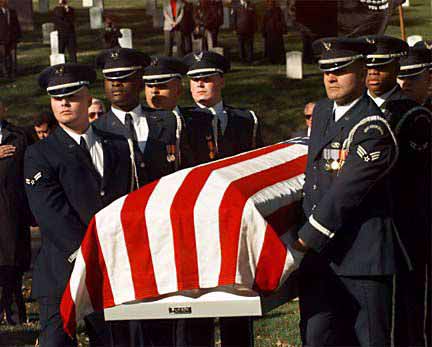
The History of Memorial Day

Originally known as Decoration Day, Memorial Day was a day set aside to honor the nation's Civil War casualties by decorating the soldier's graves.

Memorial Day was first widely observed on May 30, 1868 to commemorates the sacrifices of the Civil War soldiers. General John A. Logan of the Grand Army of the Republic, an organization of former soldiers and sailors proclaimed the following:

"The 30th of May, 1868, is designated for the purpose of strewing with flowers, or otherwise decorating the graves of comrades who died in defense of their country during the late rebellion, and whose bodies now lie in almost every city, village, and hamlet churchyard in the land. In this observance no form of ceremony is prescribed, but posts and comrades will in their own way arrange such fitting services and testimonials of respect as circumstances may permit."

At first observance of Decoration Day, in 1868, General James Garfield (it would be another 14 years until he would be President) spoke at Arlington National Cemetery. Afterwards, some 5,000 attendees helped to decorate the graves of the more than 20,000 soldiers from both the Union and Confederate soldiers buried there.

Many Northern and Southern cities and towns claim to be the birthplace of Memorial Day. Some of these include Columbus, Miss.; Macon, Ga.; Richmond, Va.; Boalsburg.; and Carbondale, Ill. However it is Waterloo, New York who officially holds this honor.

In 1966, President Lyndon Johnson, declared Waterloo, N.Y., the official birthplace of Memorial Day. Waterloo was chosen because it had first celebrated a similar holiday on May 5, of 1866, and had made the day an annual community-wide event, where businesses would close and the townsfolk would decorate the graves with flowers and flags.

After World War I, the observances of the day began to honor those who had died in any and all of the American Wars. In 1971, Congress declared Memorial Day a national holiday which was to be celebrated or observed on the last Monday in May. Veteran's Day, a similar observance is celebrated on November 11 each year. I'm not exactly sure what the difference is.

Today, like the original observance in 1868, Memorial Day is celebrated with a big to-do at Arlington National Cemetery. Small American flags are placed on each grave, and it is tradition that the president or vice-president to give a speech honoring the dead. A wreath is layed at the Tomb of the Unknown Soldier. About 5,000 people attend the ceremony annually.

Additionally, many Southern states set aside another day honoring the dead of the Confederates. It's usually called Confederate Memorial Day. I'm not sure why this day would be any different from Memorial Day or Veteran's Day, but it must not be that important because I've lived in Georgia for two years and have never noticed April 26 as being Confederate Memorial Day.

Mississippi and Alabama celebrate the day on the last Monday in April. North and South Carolina it is May 10. Louisiana and Tennessee, June 3. Texas is January 19. And finally, Virginia takes the cake by celebrating Confederate Memorial Day on the same day as the Federal issued Memorial Day, on the last Monday in May.

That is it that the famous Virginian, Robert E. Lee said? Something about my state before my country. State before the country is the reason the Articles of Confederation failed... but that is for another time.

Even if you don't agree with our current conflict in Iraq, or if you were against our involvement in Vietnam. If you're still confused about our involvement in Korea, or agree with isolationism in World War I. Or have sour taste in your mouth about World War II. Even if you're a pacifist through hand through... today is a time to honor those that have died. Some are heroes, some are schleps. Many were suckered into going to war. Many were too scared to dodge the draft. Some want to be there. Some don't.

All of them are to be honored.

Thank you to each and every person who's had a hand in protecting the freedoms of Americans, the Vietnamese, the Koreans, the Iraqis. Those that rid the world from Hitler and Mussolini. The ones who died protecting southern culture, or fighting for the equality of all men.

Thank you.

Read More...

Wednesday, May 23, 2007

Lincoln On Leadership: Circulate Amongst the Troops

I'm in the process of reading a pretty good book for executives and historians alike. It discusses executive strategies in leadership using Abraham Lincoln's approach. You'll learn a lot about the person underneath the Stovepipe hat and even more about the person reading the book (Yes, you!)

The first chapter's advice is to " Get out of the Office and Circulate among the Troops".

Lincoln surely did this. Often times Lincoln would be found with the troops, riding his horse through the ranks, amidst a background of cheers and applause. Lincoln found that casual contacts with "subordinates" was as important as formal meetings. He believed that people would feel less intimidated and be more open when in a relaxing atmosphere, as opposed to closed up in a meeting room.

Lincoln was known for motivating the troops by telling them his long term vision of the United States. From this, the troops would see the big picture and understand their role in that picture. Giving someone a sense of importance is a motivating factor which is very effective.

The picture to the right shows Lincoln who came to Antietam after the Battle of Bull Run to fire General McClellan. The picture shows Lincoln amongst the troops after the battle. Surely, Lincoln could have fired McLellan via telegram. But Lincoln is a stand up guy and probably used this as a way not to show panic amongst the troops.
The picture to the left is Lincoln talking to McClellan.

To this note, it is well known that Lincoln changed Civil War generals several times before sticking with U.S. Grant. Some say Lincoln was too involved in the decisions of the war, or that he was micromanaging. The fact remains, he did what needed to be done to keep the Union together. This could be an entirely new entry, so I'll leave it at that.

Honest Abe had an open door policy and would rarely turn anyone away. According to some observers he would spend 3/4 of his time out of the office taking what Lincoln referred to as "public opinion baths". Literally bathing himself in the thoughts of the common man. Lincoln himself said, "I have little time to read the papers and gather public opinion that way... as a whole [it] is renovating and invigorating."

Obviously, in this day and age, it is a lot harder for a president to 'circulate' amongst the common man without causing chaos. Lincoln would often refuse protection and was comfortable with his ability to relate to everyone. His amiability was one of his best qualities. A quality which allowed him to gain trust from the common man. He was self-deprecating in social settings, in such a way where his stories, would keep people entertained, but at his own expense. This, might be a result of his melancholy and a way to hide his true feelings of depression. Regardless, he was very like-able in these situations.

During the War, Lincoln could usually be found sitting next to the telegraph machine waiting for the latest battle update. This, instead of waiting across the street in his office for a messenger to deliver the news. This strategy, of looking over the decoder's shoulder, allowed Lincoln to read the telegram quickly, and immediately write a response to be quickly relayed back to the appropriate party. It allowed him to make quick decisions, something that is vital in times of war.

Future leaders can learn from Lincoln's example of getting wide acceptance of a philosophy by demonstrating it in your everyday actions. By entering your subordinate's environment, you establish a frequent human contact which develops a sense of commitment and community. With this comes trust and access to vital information that might otherwise be spread behind your back.

There is no question that Lincoln's style was effective.
PS - The book is: Lincoln on Leadership: Executive Strategies for Tough Times. It is a quick read which gives you great insight into how Lincoln operated.

Read More...

Monday, May 14, 2007

Separate is Not Equal: Brown v. The Board of Education

In 1954 on May 17th the Supreme Court made a decision that would change the way people lived in the United States forever.

It was on this day that the Supreme Court overturned the decision of Plessy v. Ferguson. For 50 years, the Supreme Court upheld precedent which permitted racial segregation in public facilities.
Separate bathrooms, separate water fountains, separate schools, separate rail cars etc... It was determined that "separate was equal."

However, it is well known that these separate schools were hardly equal. The black schools were the ones that were worn down. The black schools had the old books. The black schools were further away. The black bathrooms weren't cleaned as often. The black rail cars were not close the platform... this is not equal.

It was this way until a little girl and her family fought back.

The case was actually a class action suit filed against the Board of Education of the City of Topeka, Kansas, made up of 13 Topeka parents fighting on behalf of their 20 children.

Linda Brown, a 3rd grader, was denied enrollment in a white school just seven blocks from her home, and was instead instructed to go to her designated black school, which was across a set of rail road tracks and over 1 hour away This, is not equal.

Future Supreme Court Justice Thurgood Marshall led brown’s legal team. Marshall was sensitive to issues like this. Incidentally, Marshall applied to go to the University of Maryland Law School, but was denied admission because he was Black. Instead, Marshall went to Howard University Law School where the new dean instilled a desire in the the students to apply the tenets of the Constitution to all Americans.

Marshall, was reluctantly living the life of the Plessy v. Ferguson era. Going to a black school, having been denied acceptance into the white school. He would, however get his just deserts, as his first major court case came in 1933 when he successfully sued the University of Maryland to admit a young African American. That is justice.

In the Brown case, Presiding Cheif Justice Earl Warren wrote the unanimous decision stating that racial segregation was unconstitutional… (totally different world to think that anyone would think the opposite.)

The decision's basis was that "separate is inherently unequal…" Our Constitution's 14th Amendment clearly states that no citizen of the united states should be denied the right to life or liberty.

"All persons born or naturalized in the United States, and subject to the jurisdiction thereof, are citizens of the United States and of the State wherein they reside. No State shall make or enforce any law which shall abridge the privileges or immunities of citizens of the United States; nor shall any State deprive any person of life, liberty, or property, without due process of law; nor deny to any person within its jurisdiction the equal protection of the laws."
I don't see any ambiguity in this one... No State, shall make any Law which shall abridge the privileges of its citizens. Period.

This case, paved the way for civil rights and should be celebrated as one of the greatest victories in American History...
PS:
Excellent resource for classrooms: http://www.landmarkcases.org/brown/background2.html

Read More...

Thursday, April 26, 2007

Abraham Lincoln's Corrupt Bargain

James Gordon Bennett, was the founder, editor and publisher of the New York Herald from 1835 until 1866 when the reigns were handed to his son.


Though Bennett will tell you that his newspaper was officially independent, he made it well known that he opposed Abraham Lincoln.

Consider this excerpt from an 1864 Herald, editorial:

President Lincoln is a joke incarnated. His election was a very sorry joke. The idea that such a man as he should be President of such a country as this is a very ridiculous joke. . . His inaugural address was a joke, since it was full of promises which he has never performed. His Cabinet is and always has been a standing joke. All his State papers are jokes. . . His intrigues to secure a renomination and the hopes he appears to entertain of a re-election are, however, the most laughable jokes of all.

Surely, first amendment rights take precedent, but allowing this in the paper is hardly the act of an 'independent' newspaper.

To win the 1864 nomination, Lincoln needed to win New York and needed support from Bennett and the Herald in order to do that. So Lincoln did what any good politician would do... he asked Bennett to name his price. Bribery? From Lincoln? This can't be...

Bennett, a newspaper tycoon, didn't need the money and simply wanted "attention" and "recognition".

A newspaperman before anything else, Bennett agreed to give Lincoln's administration "a thorough exposition in the columns of the Herald," provided that Lincoln and his advisers "occasionally... make known to him [their] plans."

It's important to note that the Herald was known for lacking in morals and respectability and Bennett was barred from polite New York society because he was "too pitchy to touch".

Lincoln, needing the votes, appointed the totally unqualified Bennett as minister to France. Bennett, who wanted the social recognition, accepted the position.

The bargain was done. The Herald no longer criticized the President, and New York's 33 Electoral Votes went to Lincoln.


Bibliography:
Donald, David. Lincoln Reconsidered. 2nd ed. New York: Alfred a. Knopf, Inc., 1956. 74-75.

Read More...

Sunday, April 15, 2007

We The People... Must Pay Taxes

Traditionally, April 15 is tax day. It is a day that lives in infamy as the one event that many Americans see as the Government's way to take advantage of the common man. Still others see it as a necessity to allow the government to take care of things we normally wouldn't want to do on our own, i.e. deliver mail, put out fires, fix the potholes, police our streets, dispose of waste, or mow the grass at the park.

In order for our government to establish Justice, insure domestic tranquility, provide for the common defense, promote the general welfare, and secure the Blessings of Liberty... We the People, must pay taxes. Plain and simple.

However, it wasn't always this way.

The fledgling United States did not originally have an income tax. The original tax was brought about because of the great debt the states were in after The Revolutionary War.

Coincidentally, The Revolutionary War was ended on April 15, 1783 when the Continental Congress ratified preliminary articles of peace with Great Britain.

There shall be a firm and perpetual peace between his Britannic Majesty and the said States,…wherefore all hostilities both by sea and land shall then immediately cease.

Originally, monies collected from Whiskey and tobacco taxes provided much of
the government's early revenues. However, financing the Revolutionary War was expensive and the young United States, under The Articles of Confederation, struggled to raise funds from the thirteen states.

The Articles of Confederation (AOC), left the power to the states, leaving the federal government and the executive branch very weak without the power to levy taxes.

The AOC, adopted in 1781, reflected the American fear of a strong central government, something Thomas Jefferson fought against. This fear of a strong central government left much of the political power in the hands of the States. Therefore, the national government had few responsibilities and no nationwide tax system, relying on donations from the States for its revenue. Under the Articles, each State was a sovereign entity and could levy tax as it pleased.

In other words, the States didn't have to pay the Nation.

To pay for the war, the post Revolutionary War era brought about many new taxes. To pay the debts of the Revolutionary War, Congress levied excise taxes on distilled spirits, tobacco and snuff, refined sugar, carriages, property sold at auctions, and various legal documents.

The government however, also decided to use taxes for social influence. In Pennsylvania for example, there was an excise tax on liquor "to restrain persons in low circumstances from an immoderate use thereof." Much like the tax on cigarettes today.

So what about the income tax? When did this come into play? The income tax was not issued until the Civil War. However there was talk of using it sometime before that. There was never a thought to use taxes to equalize income and wealth, or for the purpose of redistributing income or wealth. Although Thomas Jefferson had his opinions on such an idea.

Jefferson, to "promote the general welfare" once wrote:

To take from one, because it is thought his own industry and that of his father
has acquired too much, in order to spare to others who (or whose fathers) have
not exercised equal industry and skill, is to violate arbitrarily the first
principle of association, "to guarantee to everyone a free exercise of his
industry and the fruits acquired by it."
This sounds unfair doesn't it. It throws Darwinism out the window, like a colonial chamber pot. Which is why men would always walk on the building side of the sidewalk, so that they would receive the brunt of the mess, should someone decide to dispose of last night's eliminations at that juncture.

Today, we have the tiered tax system to "promote the general welfare". Sure, you can say its not fair, but that is how it is done. There are all sorts of arguments for a fair tax plan, and ideas to only tax consumer goods and do away with the income tax altogether. Who knows what is best? Who knows if the Fair Tax Act would actually work? I'll save the discussion for another time.

The income tax, as we know it today, was first exercised during the Civil War. When the Civil War erupted, Congress passed the Revenue Act of 1861, which in addition to restoring earlier taxes, also imposed a tax on personal incomes. Any person making more than $800 a year was levied a 3 percent tax. The tax was not enforced until the following year.

In the spring of 1862, it was now clear that the war would not end quickly, as originally thought, and the government would need additional revenue to pay for its $2 million daily growth in debt.

To remedy this Congress passed new taxes on playing cards, gunpowder, feathers, telegrams, iron, leather, pianos, yachts, billiard tables, drugs, patent medicines, many legal documents and once again... whiskey.

The 1862 law also introduced the first tiered tax system. Incomes up to $10,000 were taxed at 3 percent, while anything higher was taxed at 5 percent. There were standard deductions and taxes were withheld at the source by employees.

When the war ended, the need for a continuous Federal revenue stream declined and most taxes were repealed in 1868. The income tax was abolished in 1872.

By 1913, 36 States had ratified the 16th Amendment, which authorized an income tax. The new income tax law had rates beginning at 1 percent and rising to 7 percent for taxpayers with income in excess of $500,000. Less than 1 percent of the population paid income tax at the time. They used the 1040 form, which is something we all know and love.

World War One greatly increased the need for federal revenue generated through taxes. An act in 1916 raised the tax rate. It was raised again in 1918. The Roaring Twenties allowed the economy to boom, and Congress cut the tax rate 5 times.

Even after the crash of 1929, another tax hike was enacted in 1932, and so on and so forth. Each new war brought more money needed, more taxes, different taxes, sneakier taxes, etc...

We the People, in order to form a more perfect Union... must pay taxes.

Read More...

Tuesday, April 10, 2007

Here's To You Mr. Robinson

On this date, April 10, 1947, Jackie Robinson became the first African-American player to sign a major league contract.

Like the good businessman he turned out to be, Robinson signed a one-year contract with the Brooklyn Dodgers. Dodger's general manager Branch Rickey personally recruited Robinson from the Negro Leagues to play with his ballclub. Robinson left baseball early, after 10 years of service to pursue other endeavors. He became the Vice President for Chock Full o' Nuts and then tried his hand in politics.

On April 15, 1997, the 50th anniversary of Robinson's entry into Major League Baseball, Commissioner Bud Selig announced that Robinson's #42 would be retired throughout baseball and would never again be issued to on-field personnel. (players currently wearing the number were grandfathered in and allowed to wear the number until retirement)

This year, to mark Robinson's 60th Anniversary, Major League Baseball will honor Robinson once again by allowing players to wear his retired #42 jersey. The idea apparently came as a result of a phone call that Reds' right fielder Ken Griffey Jr. made to baseball commissioner Bud Selig, requesting permission to wear it on the anniversary.

Each of the 15 games throughout Major League Baseball on April 15th will feature festivities to honor Mr. Robinson. The national celebration of Jackie Robinson Day will take place at Dodger Stadium with many VIPs, an on-field ceremony before the game Among those participating in the festivities will be Rachel Robinson, Jackie's wife and founder of The Jackie Robinson Foundation; their daughter, author Sharon Robinson; several of Jackie's former teammates; baseball executives and civic and industry leaders; Jackie Robinson Foundation Scholars; and winners of the Breaking Barriers Essay Contest. (info. courtesy of http://www.mlb.com/)

In his rookie season of 1947, Robinson won Rookie of the Year. He as the league's Most Valuable Player in 1949, and led the Dodgers to 6 pennants in his 10 seasons. For more information visit the Baseball Almanac for all of Jackie Robinson's Career Stats.

More than a great ball player, Robinson personifies courage, determination and perseverance. He, like so many black ball players after him had to endure a lot of hardship to play the game they loved. I applaud Jackie Robinson not only for his athletic prowess, but for his courage to be the first to step foot on a major league ball field. He could have said no, and left the name calling and death threats to someone else. But he didn't.

Like Robinson, I've all the respect in the world for Hank Aaron as well. He too received death threats and threats to his family if he dared to break the great Babe Ruth's home run record. Well, he dared. And he succeeded.

American history is perseverance. American history is courage. American history is baseball. American history is Jackie Robinson.


PS:


For historians, researchers, baseball fans and curious minds, check out ABNER, the National Baseball Hall of Fame Online Library Catalog...

Read More...

Saturday, April 07, 2007

Too Proud to Fight: U.S. Involvement in World War I

On April 6, 1917, the United States formally declared war against Germany and entered The Great War in Europe.

http://www.firstworldwar.com/source/usawardeclaration.htm

Already in the war since the summer of 1914, Britain, France, and Russia welcomed news that American troops and supplies would be directed toward the Allied war effort, under the command of Major General John Pershing. Though the United States was already involved in the war and was already helping the Allied war effort.

What was supposed to be none of our business, quickly became our business when a British Cruise liner, the Lusitania, was sunk in the Atlantic Ocean. Of the 1,962 civilians on board, 1,198 of them died, 124 of whom were Americans.

An atrocity!! America claimed that the Lusitania was carrying innocent cargo and vacationers on a cruise ship... very brave vacationers I might add. The United States home front was stunned and demanded that Wilson go to war. But Wilson stood firm and continuously declared neutrality. What a crock! Wilson's actions were never neutral, and I secretly think he always wanted to go to war for economic reasons, but was looking for an excuse to enter the war. He would eventually get his excuse.

This, like many American conflicts was our own fault. President Woodrow Wilson had promised to stay neutral, but he hardly followed through with this promise. In fact, despite his comments, the United States was never neutral, and the Lusitania did not have 'innocent cargo'.

The United States had been shipping war materials to Germany's enemies for some time. The sinking of the Lusitania in 1915 by Germany was justified.

After warning of "unrestricted submarine warfare" to ANY ships found in the Atlantic Ocean in an around Europe, the Germans had every right to torpedo the Lusitania.

Germany had already sunk a number of merchant vessels. Their ban of ships in this area was a simple war time tactic. They feared the US would supply their enemies with supplies on the sly.

Germany, sandwiched between France, Russia and Britain had almost no shot at winning the war. To remotely have a chance, Germany needed to make sure that Russia was not being sent supplies from the US or Britain for that matter. Taking Russia out of the war would eliminate the entire Eastern front and Germany could then focus on the West. Russia did eventually leave the war due to their troops' morale being low as a result of food and supplies not being replenished and the rapidly decreasing economy of their homeland. Russia's surrender was a big reason the United States joined the war... Wilson could not justify staying out of the war and allowing Germany to win.

The Lusitania's cargo, according to Howard Zinn contained the following:

1,248 cases of 3-inch shells
4,927 boxes of cartridges (1000 rounds per box)
2,000 cases of small-arms ammunition.

...hardly an innocent cargo.

Both Britain and the United States then lied about the cargo on-board, falsifying the manifests.

We were asking for it. Germany asked us not to get involved. Germany issued a warning that any ship in the area would be sunk. America claimed it was remaining neutral. As far as I'm concerned, shipping supplies to other countries is not staying neutral.

Perhaps Wilson was looking for an excuse to join the war, despite claiming that "There is such a thing as nation being too proud to fight." How about a nation, too proud to fight for the wrong reasons?

Wilson believed Germany's demands were intruding on the rights of American citizens to sail on the high seas. I believe that Wilson knowingly put American and British lives in danger by ignoring the unrestricted submarine warfare warnings.

This war was not about the United States. It was about European Alliances. It was about Nationalism, Imperialism and Militarism. The United States did not need to be involved. But there is an obvious contradiction to this neutrality with the delivery of supplies. This contradiction leads many to believe that Wilson was looking for a reason to get involved in the war.... but the US interest in the war was more about the future of the US Economy and less about the immediate defense of its citizens.

The United States would not stand to see Britain defeated by Germany. The United States' economy relied heavily on foreign markets to the tune of $3.5 billion. Britain was seen as a country that needed loans and the American companies like JP Morgan and Company were just what Britain needed.

Additionally, industrialists realized that involvement in the war would mean increased production and sale of their resources. Tycoons of steel, railroads, gun powder, automobiles and banks were sure to benefit from the US involvement in the war.

There is no doubt that a war is a good way to pull an economy out of a depression or a recession, but why can't our administrators be honest about why we go to war? It was not about the innocent lives of Americans but rather our posterity.

More to Explore:

World War I Lesson Plans/Primary Source Documents
Woodrow Wilson Lesson Plans/Primary Source Documents

Read More...