


 Because I'm curious and I like to share the fruits of my curious mind, I once again present to you the true history of another American Holiday. This time, it is Presidents' Day's turn.
In 1796, during the last full year of Washington's presidency the United States decided to honor their great president by celebrating his birthday. Washington was born on February 22, 1732. Though according to the old style calendars which predate the mid-18th century his birthday falls on February 11. I know it's confusing.
By the early 1800s Washington's Birthday had become an established, though not official, national holiday. Americans would honor Washington by throwing lavish Balls and receptions attended by prominent socialites and public figures. The common man would celebrate, as we American's still do, by gathering in public houses and taverns to honor Washington as another excuse to drink.
Then another well-respected February born president came onto the scene. Abraham Lincoln, whose birthday falls on the 12th of February, was formally honored on his birthday in 1865, one year after his assassination. To commemorate his death, both houses of Congress gathered for a memorial address, on the day of his birth.
Unfortunately for Lincoln, his birthday did not become a legitimate national holiday like Washington's did, but it did become a legal holiday in several states.
Washington's Birthday became an official holiday in 1880, becoming the first federal holiday to honor an American citizen. It was to be celebrated on February 22.
Don't click away yet... there's more.
In 1968, legislation was put in place to simplify yearly calendars and give federal employees some fixed 3-day weekends. The act started in 1971 shifting the observation of Washington's Birthday to the third Monday in February instead of on the 22nd. And although this holiday is still officially known as Washington's Birthday, it has become popularly known as Presidents' Day. This now makes the third Monday in February a day for honoring both Washington and Lincoln. Though I'm pretty sure it's okay to honor other presidents as well.
And in true American fashion, Presidents' Day is also synonymous with sales and shopping. Do you think George and Abe mind people honoring them by buying discounted appliances?
PS - Though most put the possessive apostrophe for President's Day after the 'T' (like I did here and in in my title for search engine optimization reasons), it is incorrect. This spelling indicates a day belonging to one President, while putting the apostrophe after the 'S', in spelling Presidents' Day, indicates a day belonging to more than one President.
Sunday, February 17, 2008
A Brief History of President's Day -


Wednesday, February 13, 2008
This History of Black History Month
 Have you ever heard of Dr. Carter G. Woodson? No? Me neither. But maybe we should have.
Dr. Carter G. Woodson, was born to parents who were both former slaves. As a child he spent his days working in the coal mines of Kentucky. He enrolled to go to high school at age twenty and graduated two years later, and continued his schooling finally earning a Ph.D from Harvard.
While studying at Harvard, Dr. Woodson noticed that the history books he was learning from lacked or ignored the contributions of the black-american population. And when blacks were mentioned, it was in ways that reflected their inferior social standing.
This upset Woodson to the point where he was motived to challenge himself to write more black Americans into the history books. In 1915, Woodson established the Association for the Study of Negro Life and History (now called the Association for the Study of Afro-American Life and History). A year later he founded the Journal of Negro history, which quickly became a well respected publication. 1926 brought the launch of Negro History Week, which aimed to bring the contributions of blacks throughout history to national attention.
Since 1926, America has recognized black history first as "Negro History Week" and later as "Black History Month"
Why February?
Woodson strategically chose the second week in February to commermorate Negro History Week because the birthdays of two men who greatly influenced the advancement of the black American population; Frederick Douglass (February 14) and Abraham Lincoln (February 12).
Because he was born a slave, thus not knowing the date of his real birthday, Douglass adopted February 14 as his birthday. He chose this date because his mother used to call him "Little Valentine".
 The transition to Black History Month is only natural considering all of the significant events in African-American history that have occurred in February.
 February 23, 1868: W.E.B DuBois, civil rights leader and co-founder of the NAACP, was born.
February 3, 1870: The 15th Amendment was passed, granting blacks the right to vote.
February 25, 1870: Hiram R. Revels, becomes the first black U.S. senator.
February 12, 1909: The NAACP was founded.
February 1, 1960: The famous "sit-in" at the Greensboro, N.C., segregated Woolworth's lunch counter (pictured)
February 21, 1965: Malcolm X was shot and died.
February 4, 2007 - Tony Dungy, coach of the Indianapolic Colts becomes the first African-American head coach to win the Super Bowl. His counterpart, Lovie Smith of the Chicago Bears was also African-American. They were the first African-American coaches in history to coach in the big game.
So whether you believe Black History Month is for good for the advancement of the awareness of black american accomplishments, or whether you believe giving the study of black history it's own month is defacto segregation. One thing is undoubtedly true. Dr. Carter G. Woodson accomplished his goal of writing more black Americans into the history books.
Tuesday, February 12, 2008
Abraham Lincoln's Birthday: February 12, 1809
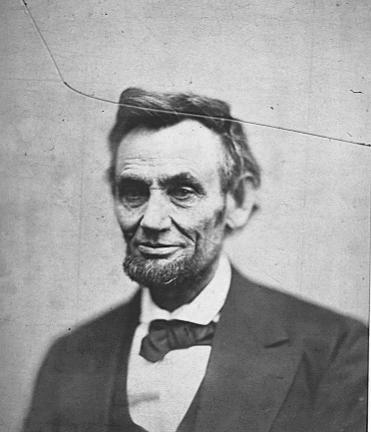 Today marks the 199th birthday of Abraham Lincoln.
Don't get too excited. Plans have been in place for some time to celebrate Lincoln's Bicentennial with pomp and circumstance which is befitting for such an outstanding historical figure.
In Illinois, they take Lincoln's birthday seriously as all Chicago public schools and state offices will be closed. Although garbage will be picked up as normal. I'm sure Abe wouldn't have it any other way.
Lincoln was born in Hodgenville, Kentucky, where apparently everything is named Lincoln. And where the lion share of the Bicentennial celebration will occur.
He spent his summers in Washington DC.
He spent much of his childhood in Indiana, where there is a national memorial. And where Indiana will also be celebrating Lincoln's 200th birthday. And where Spencer County Indiana is excited for all the publicity.
And now this guy is claiming Lincoln's ties to Idaho are stronger than any other state.
All of this begs the question... which state is Lincoln's true home state? My thoughts are all of them can claim Lincoln as their own. Can't we in Philadelphia and those in Cincinnati both claim Pete Rose?
Want to figure it all out... try ALincolnBlog.Blogspot.com, by Brian Dirck, professor at Anderson University and author of several Lincoln books. It is always my first stop for Lincoln information.
Here's his take on the states claiming Lincoln.
The Lincoln Bicentennial website really is a cool site. It has a Lincoln quiz, an interactive timeline, all sorts of Lincoln information, and lesson plans for teachers. Check it out - http://www.lincolnbicentennial.gov/
Oh... and Happy Birthday Abe.
Saturday, February 09, 2008
Quote for Thought
Have been watching Gandhi the 1982, best picture starring Ben Kingsley. With so many similarities between Gandhi and Martin Luther King, it is only fitting that I stumbled upone this quote from MLK:
"A genuine leader is not a searcher for consensus but a molder of consensus."
In thinking about both men, the quote is very appropriate.
Saturday, February 02, 2008
Jamestown: How John Rolfe, Tobacco and Worms Changed the Landscape of America
 Yes, you read that correctly. Nightcrawlers. Worms. Big brown, squishy worms. The ones that come out in the rain and at night when it's cooler. So what do worms have to do with American history? Continue reading, and you'll see the connection.
To the layman, John Rolfe is a nobody. To those that paid attention in history class they may know him as the man that married Pocohontas. History buffs know him as the man that saved Jamestown, with the sale of tobacco. Still some think he may be responsible for a permanent change in the American landscape. A change which stretches much further than the salty marshes of Jamestown.
Rolfe was a businessman who undercut Spanish imports by growing tobacco in Jamestown. Rolfe had brought a special strain of tobacco seed with him to the new colony. This particular strain was being grown in Trinidad and Venezuela. Rolfe brought the seeds despite the penalty of death to anyone selling these seeds to a non-Spaniard.
John Rolfe, like many other Englishmen of the time, was a smoked tobacco. Smoking tobacco was a fad brought to Europe by the Spanish, after there conquest of the Caribbean. Coincidentally the Indians in Virginia also smoked tobacco, but it was a different species which didn't agree with the European pallate. According to colonists it was poor and weak. Rolfe's tobacco on the other hand was "pleasant, sweet and strong." By 1620, ten years after settlement, Jamestown exported 50,000 pounds of Rolfe's special strain, and nearly six times that ten years later.
Because of the popularity of Rolfe's tobacco the tight waters of the Chesapeake were often crowded with empty ships ready to be loaded with the sweet stuff. To balance the weight of the ships, sailors dumped out the ballast, which was filled with mostly stones and soil. Historians believe this dirt almost certainly contained earthworms. And little by little these earthworms would change the landscape of America. Before the arrival of the Europeans, the forests of New England and the upper Midwest had no earthworms. At least not since the last Ice Age. Without earthworms, the northern trees and shrubs would lose their leaves, which would lie on the ground and decompose their way back into the soil feeding the trees from which they dropped. The presence of worms, turns these leaf-floored forests into a more open and dry landscape losing much of their future growth. In other words, the seedlings have no protection and nowhere to root, eliminating any chance for a dense forrest. Instead an open landscape of very mature trees exists.
It is not proven that Rolfe brought the worms, but it is known that the northern forests were worm free until the arrival of the Europeans. Earthworms don't move that fast and pretty much die where they were born, so the migration of the worms from coastal Virginia to the far reaches of the United States surely takes some time to see the real effects. Perhaps another 400 years.
Thanks to Charles C. Mann and his article 'America, Found & Lost' which appeared in the May 2007 National Geographic for the information.
Thursday, January 31, 2008
The Antiques Roadshow Takes A Closer Look at American History

While aimlessly flipping the channels a few nights ago, which doesn't happen as much as it used to now that we've upgraded to DVR, I stopped on the Antiques Roadshow.
This show always intrigues me with the background and history associated with each item. The appraisers are often times extremely knowledgeable in history and will associate the piece and how it was made with the era from which it came. To me, this makes the show very much worth watching.
But this night of the Antiques Road Show became especially enjoyable when they focused on a political sign from the 1840 election brought in by a man who inherited it from his family. The story goes that his great-grandmother, had made the sign in support of James K. Polk. The banner was appraised at $5-7,000 at auction.
His father's grandmother, was related to Abraham Lincoln. "One branch of the Lincoln family produced a gentleman by the name of Abraham," he told appraiser Catherine Williamson of Bonham & Butterfields in Los Angeles. "And the other branch of the family produced me."
I find it curious that during that era women weren't allowed to vote. But in the true democratic fashion, this woman decided to take the time to hand paint letters onto a banner which was approximately 15 by 6, using stencils. This was her way of campaigning.
Her favorite, Polk eventually did win the election on his platform of territorial expansion. He favored the annexation of Texas and the acquisition of the entire Oregon Territory, which at that time was shared with Britain. He was also pro-slavery. Polk was obviously the democratic nominee.
On the other hand Clay, representing the Whigs, had lost elections in 1824 and 1832, was against expansion and was anti-slavery. I've always been a big fan of Henry Clay, mostly because he was a man of strong convictions. He was never willing to give up. Known as the Great Compromiser his skill in negotiations staved off the Civil War twice in in 1820 with the Missouri Compromise and again with the Compromise of 1850. He also ran for president 5 times.
But back to the task at hand...
You can see the whole appraisal here: http://www.pbs.org/wgbh/roadshow/archive/200702A10.html
Who knew the Antiques Roadshow was so Web 2.0. They have archived every appraisal they've done on TV and created a pretty cool search engine to find them too.
I tuned out after that, but was a little upset that I didn't continue watching. What came next was from the personal archives of the White House photographer for JFK.
 "I was in Dallas during the horrible assassination," he told appraiser Francis Wahlgren of Christie's in New York as he recounted the details of that day. Once he realized Kennedy had died, he got on the plane with Lyndon Johnson and Jacqueline Kennedy and photographed Johnson's swearing-in ceremony.
The value of that photograph, autographed by LBJ, was $50,000, while a signed photo of the Kennedy family was appraised at $25,000.
And apparently this was THE episode to watch for american history aficianados as a Civil War Henry Repeating rifle was also appraised.
http://www.pbs.org/wgbh/roadshow/archive/200702A34.html
References:
Article about Antiques Roadshow - http://www.floridatoday.com/apps/pbcs.dll/article?AID=/20080126/LIFE/801260301/-1/archives
Missouri Compromise - http://en.wikipedia.org/wiki/Missouri_Compromise
Compromise of 1850 - http://en.wikipedia.org/wiki/Compromise_of_1850
This show always intrigues me with the background and history associated with each item. The appraisers are often times extremely knowledgeable in history and will associate the piece and how it was made with the era from which it came. To me, this makes the show very much worth watching.
But this night of the Antiques Road Show became especially enjoyable when they focused on a political sign from the 1840 election brought in by a man who inherited it from his family. The story goes that his great-grandmother, had made the sign in support of James K. Polk. The banner was appraised at $5-7,000 at auction.
His father's grandmother, was related to Abraham Lincoln. "One branch of the Lincoln family produced a gentleman by the name of Abraham," he told appraiser Catherine Williamson of Bonham & Butterfields in Los Angeles. "And the other branch of the family produced me."
I find it curious that during that era women weren't allowed to vote. But in the true democratic fashion, this woman decided to take the time to hand paint letters onto a banner which was approximately 15 by 6, using stencils. This was her way of campaigning.
Her favorite, Polk eventually did win the election on his platform of territorial expansion. He favored the annexation of Texas and the acquisition of the entire Oregon Territory, which at that time was shared with Britain. He was also pro-slavery. Polk was obviously the democratic nominee.
On the other hand Clay, representing the Whigs, had lost elections in 1824 and 1832, was against expansion and was anti-slavery. I've always been a big fan of Henry Clay, mostly because he was a man of strong convictions. He was never willing to give up. Known as the Great Compromiser his skill in negotiations staved off the Civil War twice in in 1820 with the Missouri Compromise and again with the Compromise of 1850. He also ran for president 5 times.
But back to the task at hand...
You can see the whole appraisal here: http://www.pbs.org/wgbh/roadshow/archive/200702A10.html
Who knew the Antiques Roadshow was so Web 2.0. They have archived every appraisal they've done on TV and created a pretty cool search engine to find them too.
I tuned out after that, but was a little upset that I didn't continue watching. What came next was from the personal archives of the White House photographer for JFK.
"I was in Dallas during the horrible assassination," he told appraiser Francis Wahlgren of Christie's in New York as he recounted the details of that day. Once he realized Kennedy had died, he got on the plane with Lyndon Johnson and Jacqueline Kennedy and photographed Johnson's swearing-in ceremony.The value of that photograph, autographed by LBJ, was $50,000, while a signed photo of the Kennedy family was appraised at $25,000.
And apparently this was THE episode to watch for american history aficianados as a Civil War Henry Repeating rifle was also appraised.
http://www.pbs.org/wgbh/roadshow/archive/200702A34.html
References:
Article about Antiques Roadshow - http://www.floridatoday.com/apps/pbcs.dll/article?AID=/20080126/LIFE/801260301/-1/archives
Missouri Compromise - http://en.wikipedia.org/wiki/Missouri_Compromise
Compromise of 1850 - http://en.wikipedia.org/wiki/Compromise_of_1850
Saturday, January 19, 2008
Martin Luther King Jr. -- January 15, 1929 - April 4, 1968

In August of 1963, in front of thousands of supporters at the March on Washington, the great Dr. Martin Luther King proclaimed:
"I have a dream that my four little children will one day live in a nation where they will not be judged by the color of their skin but by the content of their character."
Would Dr. King be proud of the nation we live in today? Would Dr. King settle for the way things are now in 2008? Would things have been different had Dr. King not left us too soon?
What can be written about Dr. King that hasn't been written before? His courage, his bravery, his fight, his passion, and his conviction will continue to inspire expression.
King is respected all over this great diverse nation, but probably non-more than in the city of Atlanta. A city rich in black history and civil rights tradition. The birthplace of Martin Luther King. The city where the great, and equally "brave" Hank Aaron overcame adversity and death threats, to proudly finish his illustrious career. The city where on Stone Mountain, outside of Atlanta's city limits, the second founding of the KKK occurred in 1915. The city that was burned to the ground for spite during the Civil War. Yet still, it is the city where every year on the 3rd Monday in January, the world stops to honor the great Martin Luther King.
King is honored with an all day church service televised for all to see.
When I taught Social Studies in Atlanta, to a group of predominantly African-American students, I couldn't help but get emotional when speaking about King's bravery. The students know of his legacy. They respect his legacy. And most importantly they will carry that legacy on to their children, so that one day they can "live in a nation where they will not be judged by the color of their skin but by the content of their character."
Martin Luther King Jr. -- January 15, 1929 - April 4, 1968
King's Legacy can not be limited to mere facts, but here are a few which you may not have known.
At the age of thirty-five, Martin Luther King, Jr., was the youngest man to have received the Nobel Peace Prize. When notified of his selection, he announced that he would turn over the prize money of $54,123 to the furtherance of the civil rights movement.
In 1964, King became the first black American to be honored as Time magazine's Man of the Year.
King's efforts were not limited to securing civil rights; he also spoke out against poverty and the Vietnam War.
Wednesday, December 26, 2007
I'm Dreaming of a White House Christmas
 Whether its by an expedition through the woods to chop down a spruce, or a last-minute run to the trailer in the parking lot; the Christmas tree, no matter how it's brought home has become an American tradition. And like any other Americans, the family living in the big white house on Pennsylvania avenue has tradition surrounding their holiday evergreen as well.
The tradition of a placing a decorated tree in the White House began in 1889 during the Presidency of Benjamin Harrison. Harrison, who gave turkeys and gloves to his employees for Christmas was the first president to have a tree.
And what began as a family gathering has become a national tradition. Through the years, the White House Christmas tree has personified the First Family, and has been an inspiration in representing both the times and tastes of the country.
In 1895, for example, Grover Cleveland's First Lady Frances Cleveland created a "technology savvy" tree, which donned electric lights (a white house first).
Thee ever-fashionable Jackie Onassis, started the tradition of Christmas tree themes in 1961 when her tree was decorated with toys from Tchaikovsky's Nutcracker Suite.
Today the tradition continues as each first lady selects her own theme which is usually a sign of the times. In 2001, current First lady Laura Bush chose "Home for the Holidays" which represented the family homes of many of the past Presidents.
In 1998 Hillary Clinton themed her tree a "Winter Wonderland" and trimmed the tree with snowmen, mittens and hats.
Pictured above, the Nixon's tree represented each of the 50 states with ornaments made by disabled workers in Florida.
So, don't be afraid to go all out on your Christmas tree theme. It is after all, an American tradition.
Merry Christmas!
For more information about Christmas at the White House and to see more Christmas tree pictures, go to http://www.whitehouse.gov/president/holiday/whtree/
Wednesday, December 12, 2007
Happy Birthday John Jay!
 John Jay, the least recognized of the three authors of the Federalist Papers, who was also elected by George Washington as our our Nation's first Supreme Court Justice, was born on this date, December 12, 1745.
To me this wouldn't be news if it were not for the coincidence of one of his more famous causes and another significant historical event which shares this same day.
Let's set the scene with The Federalist Papers.
Written under the pen-name of "Plubius" John Jay is said to have authored 4 of the 85 articles written in support of the ratification of the Constitution approved by the Continental Convention on September 17, 1787. The first of these anonymous articles appeared in the New York Independent Journal on October 27, 1787.
 At the time, a federalist was someone who supported "big government", while an anti-federalist believed the power should remain with the people. John Jay, along with Alexander Hamilton and James Madison were staunch proponents of the new Constitution.
 They believed a centralized government was essential to expand the United States both commercially and geographically. Only a strong national government, they argued, could effectively negotiate with foreign countries, ensure free trade between states, and create a stable currency.
Thomas Jefferson, probably the most famous anti-federalist believed that big government would take too much power away from the people, which after all was the true meaning of democracy. It was these beliefs that laid the groundwork for our two party system.
Soon, steps were being taken to make sure that John Jay and Alexander Hamilton would win this battle.
It was December 12, 1787, John Jay's 42nd birthday when Pennsylvania became the second state to ratify the Constitution, 4 days after Delaware ratified the same document. Happy Birthday John Jay. I'm sure a pint or two was imbibed in celebration of Pennsylvania's ratification.
On a related note:
Despite both being selected to be in George Washington's cabinet, Hamilton and Jefferson would have to agree to disagree. Hamilton took the seat of Secretary of the Treasury setting a plan for a capitalist United States based on big government and big business. On the other hand Jefferson was chosen as Secretary of State and asked to deal with foreign powers. His first came during the French Revolution when he and Washington disagreed on how to handle the situation.
Saturday, November 24, 2007
FDR and Two Thanksgivings
 Two Thanksgivings; a dream to some and a nightmare for others, depending on whether you're eating or cooking. In 1939 there really was two Thanksgivings.
At the beginning of Franklin Roosevelt's presidency, Thanksgiving was not a fixed holiday. At that time it was up to the President to issue a Thanksgiving Proclamation to announce what date the holiday would be. Most presidents would follow suit and announce the holiday as the last Thursday in November.
Many believe that the Pilgrims chose this day, but that is not the case. It was 1863 when President Lincoln began the observance of Thanksgiving in November, making it a national holiday. Lincoln's decision came in the middle of the Civil War and seems to be an awkward attempt to bring faith back into a war-torn country. Below is an excerpt from Lincoln's Thanksgiving Proclamation:
I do therefore invite my fellow-citizens in every part of the United States, and
also those who are in foreign lands, to set apart and observe the last Thursday of November next as a day of thanksgiving and praise to our beneficent Father who dwelleth in the heavens.
Here's the full text of Lincoln's Thanksgiving Day Proclamation, from October 3, 1963.
Like all the presidents that preceded him, FDR kept tradition until he felt other circumstances would supersede tradition. What circumstances you ask? How about the economy and the Great Depression.
In 1933, FDR's first year in office, Thanksgiving fell on November 30th, the last day of the month and the 5th Thursday. Because statistics showed that most people did not do their Christmas shopping until after Thanksgiving businesses feared a loss in revenue. November 30th left only 24 shopping days between Thanksgiving and Christmas.
Many business owners asked President Roosevelt to make Thanksgiving one week earlier. The requests were ignored until 1939, when Thanksgiving was once again due to fall on the last day of the month. This time FDR listened to the requests and moved Thanksgiving to November 23rd and not November 30th.
This simple date change seemed easy enough, but in actuality proved to be a short-sighted blunder. Thousands of letters poured into the White House from small businesses, calendar manufacturers and universities claiming that the date change will actually harm and/or disrupt their business or routine.
While some retailers were pleased to have the extra week of holiday shopping, smaller businesses claimed they'd lose business to the larger stores. Calendar makers had already printed some of their calendars years in advance making their future supplies now obsolete and out of date. Some Americans were simply upset with Roosevelt's attempt to alter the long-standing tradition just to help businesses make more money. And finally, schools with annual Thanksgiving day football games were now forced to reschedule, and so on and so forth.
Some of these letters can be found at the FDR Library: http://www.fdrlibrary.marist.edu/thanksg.html
With increased opposition, some states refused to honor the new date and kept November 30th as Thanksgiving day. Depending on which state you were from determined which date Thanksgiving was observed. So those living in Connecticut would not have the same day off as those living in New York and thus, family and friends were unable to celebrate the holiday together.
A stubborn FDR continued to observe Thanksgiving on the second to last Thursday of November for two more years/ The amount of public outrage eventually convinced Congress to pass a law on December 26, 1941, declaring Thanksgiving as the fourth Thursday of November every year.
For more Thanksgiving history, visit this timeline: http://memory.loc.gov/learn/features/thanksgiving/timeline/1541.html
Monday, November 19, 2007
The Gettysburg Address - November 19,1863
 On this day, 144 years ago, approximately 6 weeks after 7,500 men died in a 3 day battle, 1 man, bellowed 10 sentences and 272 words in 3 minutes. Little did he know that this short speech would eventually become the most quoted speech in United States history. And for good reason.
The speech rang true with many, even to this day as establishing "a new birth of freedom". It was a speech that would bring equality to all citizens, and create a unified nation where the rights of the states were no longer dominant. This man declared a government of the people, by the people, and for the people.
What many probably don't know is that this speech almost didn't happen. The Abraham Lincoln Blog has a pretty cool primary document of a letter addressed to Lincoln asking him for "A Few Appropriate Marks", leaving Edward Everett, a popular orator of the time to be the main attraction.
Funny to think that the President of the United States was playing second fiddle and received the invitation less than 3 weeks before the scheduled event. The Abraham Lincoln Blog has the full text of the letter. (thanks for bringing this to our attention)
And without further ado ... Abraham Lincoln's "Gettysburg Address", November 19, 1863
"Four score and seven years ago our fathers brought forth on this continent a new nation, conceived in Liberty, and dedicated to the proposition that all men are created equal.PS - A new photo of Abraham Lincoln at the Gettysburg memorial ceremony was found. It is the first such discovery since 1952. Here is the link...
Now we are engaged in a great civil war, testing whether that nation, or any nation, so conceived and so dedicated, can long endure. We are met on a great battle-field of that war. We have come to dedicate a portion of that field, as a final resting place for those who here gave their lives that that nation might live. It is altogether fitting and proper that we should do this.
But, in a larger sense, we can not dedicate—we can not consecrate—we can not hallow—this ground. The brave men, living and dead, who struggled here, have consecrated it, far above our poor power to add or detract. The world will little note, nor long remember what we say here, but it can never forget what they did here. It is for us the living, rather, to be dedicated here to the unfinished work which they who fought here have thus far so nobly advanced. It is rather for us to be here dedicated to the great task remaining before us — that from these honored dead we take increased devotion to that cause for which they gave the last full measure of devotion — that we here highly resolve that these dead shall not have died in vain — that this nation, under God, shall have a new birth of freedom — and that government of the people, by the people, for the people, shall not perish from the earth."
Sunday, November 11, 2007
Justice in the Wild West, circa 1850
The blog entry title itself is a paradox. Justice, as we know it hardly existed during the gold rush era. This was an era of saloons, gun fights, brothels and posses. These were mean, ugly, vigilante people.
It is these lawless men who set the scene for the first several chapters of California Justice, a book by David Kulczyk chronicles the deadliest shootouts, lynchings and assassinations in California's history. From the death of a few innocent men in 1850 to the shocking assassination of Robert Kennedy by Sirhan Sirhan.
If you're a history teacher looking for a creative way to show the ways of the world in the wild west, this is your book. There are numerous examples of the chaotic towns filled with make-shift shacks and tents in the gold rush era, when men were more likely to take the law into their own hands then to listen to reason.
The stories are suspenseful, shocking and sometimes humurous, which will undoubtedly peak the interest of the passive reader. I do recommend this book for classroom use.
Two of the more famous assassinations highlighted in the book are those of Benjamin "Bugsy" Seigel and Robert Kennedy. The book can be a great introduction into a lesson about the Kennedy's or Robert Kennedy and the tumultuous racial issues of the 60s and 70s.
All in all it's a good book written in short story/vignette style. The best audience would be those interested in teaching or learngin about California history.
Saturday, November 10, 2007
Saluting America's Veterans
 History: a continuous, systematic narrative of past events as relating to a particular people, country, period, person, etc., usually written as a chronological account;
The definition sounds simple enough, right? A narrative of past events. And what better way to record history then through first hand accounts of those that experienced these events, whatever they might be.
Wouldn't our history books be much better, had someone taken the time to interview Thomas Jefferson? Or what about a reality show on Ben Franklin. Wouldn't it have been awesome to have a panel of Revolutionary War heroes on Oprah? Imagine the stories these guys would tell. Imagine the information you would get. The dates and the timing of certain attacks. How they really felt about the red coats. History is much more vivid, when it comes right from the source. There is no telling how much richer our history would be, had these things been possible. Today they are possible.
With the recent broadcast of Ken Burns' "The War" on PBS there has been an increased awareness in the stories of this country's veterans. Without the help of many dedicated individuals many of these stories would go untold. Fortunately, AmericanProfile.com is an organization dedicated to telling these stories.
In honor of Veteran's Day on November 11th, American Profile, is asking for veterans' stories. The site already has dozens of first hand accounts directly from the mouths of the soldiers who lived the pain and the glory of our american wars.
Still, they're looking for more.
Here is their press release, because frankly, it's best right from the source.
*******
NEW YORK, NY (November 6, 2007) - "Saluting America's Veterans" is sounding a call for veterans' stories this Veterans Day, November 11th.
Launched last month in conjunction with the highly-acclaimed Ken Burns' documentary series on World War II, the website has attracted dozens of personal accounts, each one putting a human face on America's 20th-century conflicts. Friends, family and colleagues are invited to share their memories, appreciation, and recognition of veterans; and veterans are invited to share their own stories of tours of duty and beyond. Anchored by a profile of Burns and exclusive video excerpts from "The War," the living museum has attracted compelling and compassionate accounts. For example:
** A WWII infantry rifleman recalls a grizzled old man in a Philippine refugee camp who kissed each of his American liberators one by one.
http://www.americanprofile.com/veterans/article/23929.html
** A WWII radioman shares journal entries written in the middle of a battle in the South Pacific, a bullet-by-bullet account during which he muses about what his wife might be doing right then. http://www.americanprofile.com/veterans/article/23662.html
**A San Francisco woman describes the shock she gave her boyfriend, a WWII Navy enlistee, when she wangled her way onto a Coast Guard boat and met his ship on its return from two years in the South Pacific.
http://www.americanprofile.com/veterans/article/24061.html
**A WWII war bride recalls an anxious year spent awaiting word of her POW husband. http://www.americanprofile.com/veterans/article/23973.html
** A member of a Vietnam helicopter crew tells a nail-biting tale of rescuing a stranded marine by dangling his legs over the side of his hovering aircraft for the marine on the ground to grab onto. http://www.americanprofile.com/veterans/article/23746.html
In addition to posting, viewing, and commenting on personal accounts, visitors can read AmericanProfile.com feature articles about American veterans on both the battlefront and the homefront, including profiles of Cpl. Matthew A. Commons, who was killed in Afghanistan, and Earl Morse, founder of the Honor Flight service that takes veterans free of charge to the war memorials in Washington, D.C.Visitors can help send veterans on Honor Flights not only by making donations directly to the organization, but also by submitting stories and photos; the more stories AmericanProfile.com receives, the more veterans it will sponsor for trips to the war memorials in Washington.
"The extraordinary contributions of America's veterans extend beyond the battlefield, and publishing the personal accounts of service members, friends, family and colleagues is our way of showing our gratitude," said Charlie Cox, editor in chief of American Profile, which created the site. "Contributors to this living museum will help ensure that our veterans get the recognition and respect they deserve."
Sunday, September 02, 2007
Utah's State Bird: The California Sea Gull?
 At my job, I am in contact regularly with a company from Utah. More specifically, I work with a woman, who's name will be "Tara" to protect her identity. Somehow in talking with her the conversation turned to Utah's State bird. And being the curious mind that I am, I inquired with "Tara" as to why Utah's state bird is the California Sea Gull.
She replied: "It has something to do with the Pioneers and their crops."
Fifth graders from Utah probably know the story, but I think the rest of our nation should be enlightened. That was enough for me to do some research to find out how the California Sea Gull played a part in our great American history.
Here are my findings.
The California sea gull has always been considered the state bird of Utah, even before its "official" inauguration.
The Gull gained this reputation in the summer of 1848, when swarms of crickets attacked the pioneer/Mormon food supply. When the crickets swarmed it is reported that flocks of the California Gulls arrived and settled in the area and "gorged themselves" on the attacking crickets. In return for saving the lives of Utah's earliest settlers, the California Sea Gull was rewarded handsomely.
The California Sea Gull officially became Utah's state bird in 1955, when a Bill, introduced in Utah's house of Reps, was approved and signed.
These birds now nest in large colonies in the islands and dikes of the Great Salt Lake and Utah Lake. A golden statue in Salt Lake City commemorates the event.
Subscribe to:
Posts (Atom)

 Posts
Posts

