Saturday, March 29, 2008

John Adams on Ben Franklin - French Fried

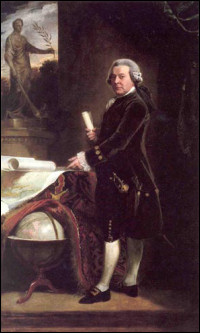
HBO brought to life the pageantry and showiness of 18th Century France, with all its pomp and formalities. A far cry from the brash nature of John Adams and his more simple life from Braintree, Massachusetts. Suffice it to say, Adams was out of place in Paris. He himself said that he was unsuitably "accoutered" to be in the company of such opulence.

Sent to France, with Benjamin Franklin, to present to Louis XVI a proposition of a treaty to defeat the British together, Adams often felt as if he was alone in this endeavor.

"The longer I live in Europe and the more I consider our affairs, the more important our alliance with France appears to me", Adams wrote in his diary. Though upon his arrival, as alluded to in HBO's series, to his astonishment France and the United States had already formed an alliance. It was after the victory at Saratoga that France agreed that this fight was winnable and agreed that...


"If War should break out between France and Great Britain, during the continuance of the present War between the United States and England, his Majesty and the said united States, shall make it a common cause, and aid each other mutually with their good Offices, their Counsels, and their forces, according to the exigence of Conjunctures as becomes good & faithful Allies"
By the way... exigence means: the condition of being in need of immediate assistance. I had no idea what it meant, and had to look it up myself.

(here is the full text of the agreement: http://www.yale.edu/lawweb/avalon/diplomacy/france/fr1788-2.htm#art2)

This agreement was signed February 6, 1778, before Adams even left the shores Boston. Word travels slow across the ocean, which caused a communication problem during Adams' entire tenure. It was nearly impossible to stay abreast on the war at home and word from congress, forcing Adams and Franklin to make uninformed decisions.

From David McCullough's book John AdamsJohn Adams by David McCullough:

"There was no news from Congress, no news of the war at home, which was a formidable a problem as any. Dispatches from Philadelphia that evaded capture at sea took at least six weeks to reach Paris under ideal sailing conditions. The great distance separating America from Europe, the inevitable long delay in any communications with Congress, or worse, the complete lack of communication for months at a stretch, would plaque both Franklin and Adams their whole time in Europe, and put them at a decided disadvantage in dealing with European ministers, who maintained far closer, more efficient contact."
Thus, an answer from an inquiry sent from Franklin, Adams or Arthur Lee (brother of Virginia's great Richard Henry Lee) the third commissioner sent by Congress, could take 6 months.

Arthur Lee's presence added to the burden Adams felt in completing his mission. Lee, he believed, was unqualified for the post and added to the aggravation of the situation because of he was distrusted and disliked by the French. Additionally, Lee had learned to dislike Franklin during his days in London, and found it difficult to serve under Franklin, refusing to share quarters with him as well.

Adams, an advocate of efficiency and order, believed that the presence of he and Lee were gratuitous and that Franklin, and his good standing relationship with the French would suffice for America's cause.

Thinking his attendance unnecessary and feeling out of place, Adams was frustrated with the entire situation and expressed his feelings in a letter to his cousin, Samuel Adams:

"Between you and me, I have a difficult task. I am between two gentlemen of opposite tempers. The one may be too easy and good natured upon some occasions, the other too rigid and severe upon some occasions. The one may perhaps overlook an instance of roguery, from inadvertence and too much confidence. The other may mistake an instance of integrity for its opposite... Yet both may be and I believe are honest men, and devoted friends to their country. But this is an ugly situation for me who does not abound in philosophy and who cannot and will not trim. The consequence of it may very probably be that I may have the entire confidence of neither. Yet I have hitherto lived in friendship with both."

What Adams is referring to is the fact that Lee believed everybody was a spy, and Franklin, on the other hand, ignorantly gave information for many years to Dr. Edward Bancroft, a New England physician who was commissioned by the Crown for 500 pounds/year. Franklin befriended Bancroft, and according to Adams, out of pure laziness left too many decisions to Bancroft and Jacques Donatien Le Ray, the Comte de Chaumont. Chaumont was a wealthy Government contractor, who allowed Adams and Franklin to stay at his gracious garden estate. It was about one hour's ride to the King at Versailles.

Ben Franklin playing the part of rustic, Pennsylvania backwoods quaker to the amusement of FranceFranklin's aloofness furthered the tension between he and Adams. Though what Franklin lacked in awareness, he made up for with his respect from the French people.
Franklin was kind of a celebrity, and was loved by the French for his American rusticness. Franklin took his diplomatic duties seriously and exaggerated his homespun image by wearing a fur hat (seen left) and simply allowing his hair to grow long, and not opting for a powdered wig, which was the acceptable fashion at the time.

The French viewed Franklin as an inventive scientist from the backwoods of Pennsylvania often mistaken for being a Quaker. And because it made him more likable, he did nothing to reveal the truth.

Franklin was indeed the perfect diplomat to France. He was well liked and was able to frolic amongst the fancily-clad French, and considering his intelligence, his support of independence and assuming proper orders from Congress, could have done the job himself. Adams on the other hand, didn't fit in and was forced to assimilate to the French culture before becoming comfortable in his role. This is why Adams felt his services were not needed and would have rather fought for the Continental Army.
It was here that Adams' thoughts on Franklin began to change. I'll save his opinions for another post.

Read More...

Tuesday, March 25, 2008

John Adams Miniseries- Part 2 - Independence

Just some quick thoughts on Part 2 of the HBO miniseries. HBO did run this back to back with Part 1 last week, luring people with the excitement of 2 full hours of drama.

Part 2, entitled Independence, picks up at the First Continental Congress. I'm paralleling my reading of McCullough's John Adams with the mini-series and notice that HBO has decided to take what Adams wrote in his journals and use it in the dialog in Adams' conversations. It's a much better strategy than that of a voice over, which to me can be a distraction.

Once again, many great events in American history are referenced and not highlighted, and for good reason. It must be noted that these are the trials and tribulations of John Adams and not an overview of the Revolution, and thus Lexington and Concord warrants only a mention in passing. So if you're wondering when you're going to see George Washington at Valley Forge, you won't.. but pay attention, it is alluded to.

Ben Franklin, John Adams and Thomas Jefferson reading the Declaration of IndependenceAnother observation I found curious was the editing of Jefferson's version of the Declaration of Independence. In the past, I've seen it as being picked apart by many of the Delegates in front of the entire Congress. Director, Tom Hooper, has decided that it was edited in private by Adams, Ben Franklin and Jefferson at Jefferson's apartment. Like the image to the left. This idea would fit to be more realistic as it was a document that had not yet been presented in any way, shape or form to the Congress, and it would seem that it should be perfected before doing so.

The final vote for Independence, which required a unanimous decision was very well done, though not as dramatic as the one I'm more familiar with in the musical 1776. But on that note, the reading of the Declaration of Independence is effectively passionate, as it starts with John Hancock, President of the Congress, and moves to Adams' daughter reading amongst Abigail and her siblings, and then to an assembly in front of the Pennsylvania State House (now known as Independence Hall).

The voting and the reading of the Declaration of Independence can be effective if shown in class. Especially if followed with 'The Price They Paid', which is a reading about what happened to the 56 delegates after signing the Declaration. I also challenged my students to take it even a step further to see if they could prove if all the stories about the Delegates were true. They're not all true... See for yourself.

Read More...

Tuesday, March 18, 2008

John Adams Mini Series - Part 1 - Join or Die

Giamatti and Laura Linney as John and Abigail Adams in HBO's John Adams miniseriesHBO's John Adams debuted Sunday night, and I must say I was impressed. I worked with Comcast to finagle HBO for free for a 6 months. I had to buy all the channels in the 100s to do so, but I worked that to only be $4/month, and it includes the Do It Yourself (DIY) Network, which is well worth the $4 alone. All it took was to say NO to their first 3 offers.

Though I don't encourage showing an unguided movie in class, I do encourage the use of a film like John Adams to enhance the learning. That said, Part 1, entitled 'Join or Die' contains an excellent portrayal of the Boston Massacre and all of the indecision and doubt that surrounded the trial. For about minutes, HBO took you through the "riot", the reaction from the Colony, the decision for Adams to defend Captain Preston and the soldiers and finally the trial.

Done succinctly and with very little off topic tangents, it would be of good use in a US History class discussing the Boston Massacre and how it catapulted Adams into the spotlight and further ripped the seam between the Colonies and the King. It would also serve the purpose of a government class, exemplifying the "innocent until proven guilty" mantra as well as the emphasis of "facts and evidence" as clearly stated by Adams.

In addition to the Boston Massacre, part 1 alludes to the Boston Tea Party, the Intolerable Acts and concludes with Adams being selected to attend the First Continental Congress in Philadelphia.

Here is HBO's recap of episode one: http://www.hbo.com/films/johnadams/. It's cool and interactive. Heck, use this in class. Then show bits of the film. If you've got a DVD recorder show it now... it's for education... copyright? bahumbug!!!

Laura Linney is great and the guy who plays John Dickinson is impressive as well. George Washington, is played by the usually familiar face of David Morse (Green Mile, Hack), who incidentally was born in Massachusetts, Adam's "country".

If this film does anything it changes my perception of John Adams only in as much as how he looks and talks. I'm a big fan of the movie 1776, where Adams is portrayed brilliantly by William Daniels (aka Mr. Feeny from Boy Meets World, Dr. Craig from St. Elsewhere and of course... the voice of K.I.T.T from Knight Rider).

For your pleasure I've included an excerpt from 1776, to give you an idea of how I used to view John Adams... Paul Giamatti might just be good enough to change my mind. Can't wait for Sunday night.

Read More...

Saturday, March 15, 2008

St. Patrick's Day - An American Tradition

March 17 marks the feast day of Ireland's patron saint, Patrick. St. Patrick (386-461), a cleric in the Catholic sense, is credited with banishing Ireland of snakes, even though Ireland never had snakes. Because of this, St. Patrick's day is an official holiday in Ireland, but it is celebrated informally worldwide by people of every ethnic background.

The first recorded celebration of St. Patrick's Day in the American Colonies was in Boston in 1737. These early celebrations were by men of wealth and means living in the colonies.

In the wake of American independence, many Irish Catholics from all walks of life were continuously lured to the United States with the promise of religious freedom. It was this movement that prompted St. Patrick's day to take on a more common man personae.

In 1827 restrictions on Irish emigration was lifted by Britain, and by 1835, more than 30,000 Irish immigrants were arriving in New York each year. These impoverished, uneducated immigrants established themselves quickly with their undying loyalty to their new country. The Irish came in droves and promptly joined the police and fire departments and railroad companies. To this day, many police officers, firemen, and railroad workers carry on the tradition of their forefathers by doing what their daddy did. Just look through the roster of any New York or Philadelphia police department or fire company and you'll see a plethora of Irish names.

As the number of Irish-Americans grew, so did the celebration of St. Patrick's day. Along wit hthis came the political power of the Irish communities in Boston, New York and Chicago. It was these political groups that helped get John Fitzgerald Kennedy, our nation's first and only Catholic President into office. This also explains the Boston Celtics and the Chicago River being dyed green during Chicago's St. Patrick's day celebration.

Many of the Irish in America used the March 17th celebrations as a platform for their American right of free speech. The 1970s brought a tone of political activism on St. Patrick's day with fundraising for Irish charities calling for the withdrawal of British occupancy in Northern Ireland. This brought the awareness of The Troubles in Northern Ireland to the United States.

For those that are unfamiliar with this conflict, Northern Ireland has been the site of a violent and bloody political conflict between Nationalist who want Northern Ireland to be part of the Irish Republic and the Unionists who wish to remain part of the United Kingdom.

Bono and Irish leaders during the Good Friday peace negotiationsThis activism is what prompted President Bill Clinton to invite those involved in the Irish conflict to Washington to negotiate peace, on St. Patrick's Day 1998. These talks resulted in the Good Friday Accord of April 10, 1998, which called for Protestants (Unionists) to share political power with the Catholics (Nationalists), and gave the Republic of Ireland a say in the affairs Northern Ireland.

And what would an Irish peace treaty be without Bono, pictured between David Trimble (left) and John Hume, respective leaders of Unionists and the Nationalists in a 1998 concer supporting the Good Friday agreement.

Clinton's action, is similar to the action's of Jimmy Carter at the Camp David Accords, where Muhammad Anwar al-Sadatand of Egypt and Menachin Begin of Israel were invited to Jimmy Carter's Camp David retreat to iron out their differences. The two countries did eventually find peace... here is the framework of that agreement.

PS - And here's a neat article on Green Beer, i.e. environmentally friendly breweries. Off the subject slightly, but worthy of a look-see.

Here's 1,001 Things Everyone Should Know About Irish American History and A History of the Irish in America. St. Patrick

And finally, here's a candid picture of Ronald Reagan celebrating St. Patrick's Day. For more pics of Ronald Reagan, go to http://www.reagan.utexas.edu/archives/photographs/candid.html


President Ronald Reagan on st. Patrick's day

Read More...

Saturday, March 08, 2008

March 8, 1884 - Susan B. Anthony Fights for Women's Suffrage

That date seems a little early for women's suffrage doesn't it. You're probably thinking... the 19th Amendment wasn't passed until the 1919. You're right. But March 8, 1884 marks the first date that Susan B. Anthony argued before congress. It was on this date t hat she began her address before the Judiciary Committee of the House of Representative.


We appear before you this morning…to ask that you will, at your earliest
convenience, report to the House in favor of the submission of a Sixteenth
Amendment to the Legislatures of the several States, that shall prohibit the
disfranchisement of citizens of the United States on account of sex.
Arguing to amend the Constitution to allow women the right to vote, Anthony was finally given the floor sixteen years after the idea for women's suffrage was introduced in Congress. So those that were thinking, this was a little early, must now realize that indeed it was a little late.

Anthony addressed the House Committee for four days, but it would take 35 more years before Congress would approve women's suffrage. On June 4, 1919 the "Anthony Amendment" was finally approved. On August 18, 1920, the states ratified it as the Nineteenth Amendment to the Constitution. However what was originally proposed as the 16th Amendment from Anthony took so long to pass, it was now the 19th Amendment.

Unfortunately, Susan B. Anthony died in 1906 having never cast a vote and never seeing the fruits of her labor.

For more information about Women's suffrage and Susan B. Anthony, visit The Susan B. Anthony House: http://www.susanbanthonyhouse.org/

Here's a timeline from the Library of Congress charting the women's suffrage movement: http://memory.loc.gov/ammem/vfwhtml/vfwtl.html

And for those that really love research and primary source documents, the Library of Congress Manuscript Division has a collection of the Papers of Susan B. Anthony: http://www.loc.gov/rr/mss/text/anthony.html


Read More...

Thursday, March 06, 2008

My Dearest Friend: Letters of Abigail and John Adams

John and Abigail Adams featured in a book about their lettersAs a blogger of US History I get a lot of people sending me information hoping I'll promote it here on my blog. Some of it I read, and figure it doesn't apply, others are more appropriate.

A few weeks ago I received an email, from a rep at Harvard University Press... she wrote:

"I thought that you might be interested in the recent HUP book,

MY DEAREST FRIEND: Letters of Abigail and John Adams Edited by Margaret A. Hogan and C. James Taylor of the Massachusetts Historical Society.

Soon to be featured in the March 2008 HBO miniseries, these letters not only detail the courtship and long marriage of a prominent presidential couple,they also offer keen observations and articulate commentary on world events at a critical time in American history.

If you think your readers may be interested in learning more about this famous couple, we welcome you to use—for free—the following features that we’ve created for MY DEAREST FRIEND."


And... I do think my readers would be interested. Because this one is very appropriate... for several reasons...

First of all is the fact that I'm reading David McCullough's 'John Adams', which is very entertaining and informative (see "What I'm reading" to the right). I'm not reading it as quickly as I think I should, but I've set a goal to complete it by a certain date, and will do my best to meet that goal. And will surely share my thoughts on Mr. Adams.

Paul Giamatti stars as John Adams in the HBO miniseriesThe second reason is the upcoming HBO Miniseries on John Adams starring Paul Giamatti and Laura Linney as John and Abigail. Though I don't have HBO I have toyed with the idea of getting it for one month to watch the 7 part miniseries, which starts Sunday, March 16 at 8pm. Don't know if Comcast would do that....

So, 'my readers', I present to you...

Edited by Margaret A. Hogan and C. James Taylor of the Massachusetts Historical Society.

Soon to be featured in the March 2008 HBO miniseries, these letters not only detail the courtship and long marriage of a prominent presidential couple,they also offer keen observations and articulate commentary on world events at a critical time in American history.

* http://www.hup.harvard.edu/catalog/ADAMYD.html
* Ten-minute audio interview with co-editor Margaret Hogan about the letters
* Margaret Hogan\'s charming essay on the Adams\' courtship (730 words)
* PDF excerpt from MY DEAREST FRIEND
* Book TV video of three famous couples reading selected letters from

So there you have it...

I inquired to HUP about sending me the book to review it here... I haven't heard back. But would surely be interested. There has been one book I was sent to review called California Justice. You can read that review here. I will be highlighting several of the stories from the book in the future. Coincidentally, my review didn't bring justice to the book. I was busy and owe the publisher another shot...

PS - Thank you to all of those who have signed up for my feed. I created the link late last night and got 14 subscribers after day one. Thanks for reading. Please comment, I'd like to know who my readers are...

PSS - And if you're a publisher.. I'm always up for a good read.

Read More...

Saturday, March 01, 2008

Abraham Lincoln in Song

Abraham Lincoln in Song a collection of civil war era music inspired by abe lincolnA colleague of mine sent me this link to an article a few weeks ago. It's a series of songs saluting Abraham Lincoln. The collection of mostly Civil War-era songs, includes "Dixie" and "Battle Cry of Freedom", entitled "Abraham Lincoln in Song".

Singer/songwriter Chris Vallillo says that "Lovers of acoustic music, history buffs and especially the educational audience". Valillo, who is from Illinois has studied Lincoln's life and Illinois folk traditions. The album seems like a natural progression. A link to his website is below.

http://www.ginridge.com/

The album was released on Lincoln's birthday, February 12, and can entertain and educate. If you're studying the Civil War, I might recommend playing this album as the kids are entering the room. Have them listen to the music and the lyrics and give them a journal entry, or a sponge, or whatever you're calling it these days asking them to write about the songs and the music.

Play "Battle Cry of Freedom," which was inspired by Lincoln's call for Union volunteers to join the Army.

Challenge the students to try and recognize the melody of "Aura Lee." Written in the 1860s, it is the melody for Elvis Presley's "Love Me Tender." There are songs about Lincoln's funeral train and a runaway slave. On a side note, "Dixie" is said to be Lincoln's favorite. Valillo says it was played by the White House Band the day peace was declared as a way to inform the crowds of the news.

Just opening the conversation to music is a good way to make the lesson more authentic by asking them what their favorite artists are writing about and what messages they're trying to convey. Music is a universal language.

As a teacher I've used music in my classroom on various occasions.

Billy Joel's "We Didn't Start the Fire" was a good way to teach the modern era of American history by challenging the students to learn all of the people, places and events that are highlighted in the song. I followed that by having them come up with their own verse of what has happened during their lifetime. Which was approximately 1990 - 2007, which worked well because Billy Joel's song went to 1989. Click here to see a video highlighting the song's events and read the comments left by my students.

I used the Beatles's "Revolution" to start a dialogue on what exactly is a revolution, and what message were Lennon and McCartney trying to convey? This works well in civics and American history. And everybody likes the Beatles.

Bob Dylan's 'Blowin' In the Wind'henry david thoreau was a transcendentalist and loved nature, James Taylor's "Carolina on My Mind", John Denver's "Rocky Mountain High" and Brad Paisley's 'Mud on the Tires' inspired thought on American transcendentalism, Ralph Waldo Emerson, Henry David Thoreau and what the true meaning of life is. This was followed by students bringing in and sharing their own music of that emphasized living a simple life and celebrated the truth found in nature and in personal emotion and imagination, as opposed to an organized belief. They liked sharing their music with everyone in the class. They brought in everything from Led Zeppelin to 311. And they made pretty good arguments for their choices.

I used Garth Brooks' "Belleau Wood", which is about the World War I Christmas truce on the Western Front in 1914 during a World War 1 unit. It was cool when all the students started to sing along. For the lyrics to this song, click here. (It's not 100% historically accurate, but a good starting point to understand the human factor of war). You can buy the album here.

And of course, I've used a few songs from the famous School House Rocks collectionSchool House Rocks is great for the classroom. "I'm Just a Bill", "The Shot Heard 'Round the World" and my favorite... "The Preamble" to the American Constitution. I like using this during the first week of an American Government class. To this day, our government still holds true to the promise in the preamble. Or do they? It makes for good class discussion.

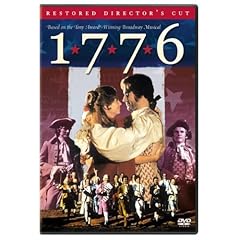
1776 Musical great movie to use in the classroom when studying the american revolutionAnd I'm sure this counts as music, but the movie '1776' is a musical. I've used that as well. That movie is a great way to personify the Constitution Convention and the seriousness of the Declaration of Independence. The kids like to see Mr. Feeney (William Daniels) from Boy Meets World, who plays John Adams.

And there are dozens of other ideas I've had about using music in the classroom. I would love to hear more ideas. And I know that people read this blog, my statistics tell me so... so please leave a comment and share your thoughts.

Read More...

Tuesday, February 19, 2008

An Officer and a President: The Military Service of Our Presidents

One of our President's seven main duties is that of Commander in Chief of the U.S. Armed Forces. Essentially the be-all-end-all of every major military decision. From the signing peace treaties with Britain in the late 1700s to the decision to remain in Iraq in 2008, the President is the highest military authority.

This being said, serving in the military is not a pre-requisite to become President, although more than half of our Presidents have done so.

In these times of change, Republican front-runner, John McCain's military background is being seen by some as a competitive advantage. And if elected it could very well impact his decision making. A recent article on McCain in Newsweek highlighted this fact and also took a closer look at six presidents who's military service have had a particular impact on them. According to historian Michael Beschloss)

George Washington
Top Military Rank: General
Active Service: American Revolutionary War, French and Indian War
Branch: Virginia Militia, Continental Army

After successfully winning the Revolutionary War, Washington knew Britain still posed a serious threat, and thus signed an unpopular treaty with Britain protecting the United States from British invasion.

Andrew Jackson
Top Military Rank: Major General
Active Service: American Revolutionary War, War of 1812, Creek War, First Seminole War
Branch: Continental Army, United States Army

Known to many as the guy on the $20 dollar bill, Andrew Jackson learned a great lesson from standing up against and defeating the monstrous British Army. It gave him the courage to take on other big foes like the U.S. Bank. Although it also gave him the confidence to stomp out the innocent Cherokees and force them to move West, killing over 4,000 Cherokees on the Trail of Tears.

Theodore Roosevelt
Top Military Rank: Colonel
Active Service: Spanish-American War
Branch: United States Army

Victory in the Spanish-American War made Roosevelt a national hero. He snowballed this fame into a successful political career, catapulting him to President. Roosevelt definitely used his personality to his advantage and for that is one of our most popular Presidents. His victory in the war, giving the US control over Puerto Rico, Guam and the Philippines also set the stage for American Imperialism impacting much more than just Teddy's Presidency.

Roosevelt was also the only U.S. President to receive the Medal of Honor (awarded posthumously in 2001).

Dwight D. Eisenhower
Top Military Rank: General
Active Service: Stateside service during World War I, Supreme Allied Commander in Europe during World War II, military career lasted from 1915 to 1952.
Branch: United States Army


Like Roosevelt, it was Eisenhower's military prowess that sprung him to Presidency. But it was Ike's time in Europe where he learned that Presidents usually inflated the national budget. When pressured by the Pentagon to increase the budget for the defense war chest, Eisenhower refused and kept a well balanced budget.

John F. Kennedy
Top Military Rank: Lieutenant
Active Service: World War II
Branch: United States Navy

Kennedy's service in World War II gave him the critical thinking skills to realize how one problem could cause another and another. This undoubtedly gave him the decision making skills and the mind-set to handle the Cuban Missile Crisis as calmly and as successfully as he did.

George H.W. Bush
Top Military Rank: Lieutenant
Active Service: World War II
Branch: US Navy Reserve


Big Bush was a pilot. His aviator experience made him knowledgeable about the risks associated with war (He was shot down and lost two of his crewmen). Some believe this encouraged him to support the Powell Doctrine, which states that a list of questions all have to be answered affirmatively before military action can be taken by the United States.

Though there are only six presidents highlighted in the McCain article, there are several other's who's time in the military impacted their presidency. I've taken the time to do some of my own research to find them.


Ulysses S. Grant
Top Military Rank: General
Active Service: Mexican War, Civil War
Branch: US Army

We all know Grant received world-wide fame for leading the Union Army to victory in the Civil War. But, Grant was fighting a war of attrition. Compared to General Lee, he had a larger, better equipped, and better fed army and wasn't afraid to watch men die. That said, he'd win his battles based on sheer numbers. This doesn't take away his unbelievable strategy at Vicksburg, but it did effect his presidency.

Experts, traditionally view Grant as a President in the bottom quadrant of US Presidents, mostly because of his tolerance of corruption. Grant would often tolerate financial and political corruption among top aids, seemingly unaware of the consequences to those that were being cheated. Though an honest man, Grant appears to have no heart when it comes to the well-being of others.

Jimmy Carter
Top Military Rank: Lieutenant
Active Service: World War II
Branch: US Naval Academy
Carter, had originally planned to make the Navy his career making Chief of Naval Operations his ultimate goal and believed that submarine duty was the fastest route to get there. Carter thought nuclear power would be increasing in submarines and he wanted to be where the growth was.
Carter did post-graduate work, studying nuclear physics and reactor technology for several months in 1953. This followed Carter's first-hand experience as part of a group of American and Canadian servicemen who took part in cleaning up after a nuclear meltdown at Canada's Chalk River Laboratories reactor.

His studies and experience helped Carter to understand the power of nuclear technology, knowing that the same science that could keep a submarine submerged underwater for months at a time, could undoubtedly do a lot of damage when used in weaponry. Thus Carter's knowledge of nuclear physics led him to the Strategic Arms Limitations Talks (SALT), which was a treaty aimed at reducing the number of nuclear arms produced and maintained by both the United States and the Soviet Union.

Richard M. Nixon
Top Military Rank: Commander
Active Service: World War II
Branch: US Navy Reserve

While working in the supply corps on several islands in the South Pacific, Nixon who is "not a crook", banked a large sum of money, which in turn helped him finance his first campaign for congress.
Harry S. Truman
Top Military Rank: Colonel
Active Service: World War I
Branch: US Navy Army/Army Reserve

Truman's eye-sight was terrible, and he reportedly secretly memorized the eye chart to pass the test to be enlisted in the Missouri National Guard, where he served from 1905-1911. He rejoined the Guard during the onset of WWI. The War brought out Truman's leadership qualities where he quickly rose to the rank of Colonel. This made possible his political career in Missouri and in turn to the Presidency.
Incidentally, between Truman and Teddy Roosevelt, there were no presidents to serve in the military. This was a run of 6 presidents, and 36 years between them. Taft, Wilson, Harding, Coolidge, Hoover, and finally Franklin Roosevelt, were the 6 in succession not to serve any military duty.

On the opposite side, Bill Clinton, was the first not to serve since FDR. This was a run of 9 presidents and 40 years between them. And although military experience can be very important for the character of the president, it is not, and shall never be a pre-requisite.

Read More...

Sunday, February 17, 2008

A Brief History of President's Day -

George Washington and Abraham Lincoln Presidents Day imageBecause I'm curious and I like to share the fruits of my curious mind, I once again present to you the true history of another American Holiday. This time, it is Presidents' Day's turn.

In 1796, during the last full year of Washington's presidency the United States decided to honor their great president by celebrating his birthday. Washington was born on February 22, 1732. Though according to the old style calendars which predate the mid-18th century his birthday falls on February 11. I know it's confusing.

By the early 1800s Washington's Birthday had become an established, though not official, national holiday. Americans would honor Washington by throwing lavish Balls and receptions attended by prominent socialites and public figures. The common man would celebrate, as we American's still do, by gathering in public houses and taverns to honor Washington as another excuse to drink.

Then another well-respected February born president came onto the scene. Abraham Lincoln, whose birthday falls on the 12th of February, was formally honored on his birthday in 1865, one year after his assassination. To commemorate his death, both houses of Congress gathered for a memorial address, on the day of his birth.

Unfortunately for Lincoln, his birthday did not become a legitimate national holiday like Washington's did, but it did become a legal holiday in several states.

Washington's Birthday became an official holiday in 1880, becoming the first federal holiday to honor an American citizen. It was to be celebrated on February 22.

Don't click away yet... there's more.

In 1968, legislation was put in place to simplify yearly calendars and give federal employees some fixed 3-day weekends. The act started in 1971 shifting the observation of Washington's Birthday to the third Monday in February instead of on the 22nd. And although this holiday is still officially known as Washington's Birthday, it has become popularly known as Presidents' Day. This now makes the third Monday in February a day for honoring both Washington and Lincoln. Though I'm pretty sure it's okay to honor other presidents as well.

And in true American fashion, Presidents' Day is also synonymous with sales and shopping. Do you think George and Abe mind people honoring them by buying discounted appliances?

PS - Though most put the possessive apostrophe for President's Day after the 'T' (like I did here and in in my title for search engine optimization reasons), it is incorrect. This spelling indicates a day belonging to one President, while putting the apostrophe after the 'S', in spelling Presidents' Day, indicates a day belonging to more than one President.

Read More...

Wednesday, February 13, 2008

This History of Black History Month

Have you ever heard of Dr. Carter G. Woodson? No? Me neither. But maybe we should have.

Dr. Carter G. Woodson, was born to parents who were both former slaves. As a child he spent his days working in the coal mines of Kentucky. He enrolled to go to high school at age twenty and graduated two years later, and continued his schooling finally earning a Ph.D from Harvard.

While studying at Harvard, Dr. Woodson noticed that the history books he was learning from lacked or ignored the contributions of the black-american population. And when blacks were mentioned, it was in ways that reflected their inferior social standing.

This upset Woodson to the point where he was motived to challenge himself to write more black Americans into the history books. In 1915, Woodson established the Association for the Study of Negro Life and History (now called the Association for the Study of Afro-American Life and History). A year later he founded the Journal of Negro history, which quickly became a well respected publication. 1926 brought the launch of Negro History Week, which aimed to bring the contributions of blacks throughout history to national attention.

Since 1926, America has recognized black history first as "Negro History Week" and later as "Black History Month"

Why February?

Woodson strategically chose the second week in February to commermorate Negro History Week because the birthdays of two men who greatly influenced the advancement of the black American population; Frederick Douglass (February 14) and Abraham Lincoln (February 12).

Because he was born a slave, thus not knowing the date of his real birthday, Douglass adopted February 14 as his birthday. He chose this date because his mother used to call him "Little Valentine".

The transition to Black History Month is only natural considering all of the significant events in African-American history that have occurred in February.

February 23, 1868: W.E.B DuBois, civil rights leader and co-founder of the NAACP, was born.
February 3, 1870: The 15th Amendment was passed, granting blacks the right to vote.

February 25, 1870: Hiram R. Revels, becomes the first black U.S. senator.

February 12, 1909: The NAACP was founded.

February 1, 1960: The famous "sit-in" at the Greensboro, N.C., segregated Woolworth's lunch counter (pictured)

February 21, 1965: Malcolm X was shot and died.

February 4, 2007 - Tony Dungy, coach of the Indianapolic Colts becomes the first African-American head coach to win the Super Bowl. His counterpart, Lovie Smith of the Chicago Bears was also African-American. They were the first African-American coaches in history to coach in the big game.


So whether you believe Black History Month is for good for the advancement of the awareness of black american accomplishments, or whether you believe giving the study of black history it's own month is defacto segregation. One thing is undoubtedly true. Dr. Carter G. Woodson accomplished his goal of writing more black Americans into the history books.

Read More...

Tuesday, February 12, 2008

Abraham Lincoln's Birthday: February 12, 1809

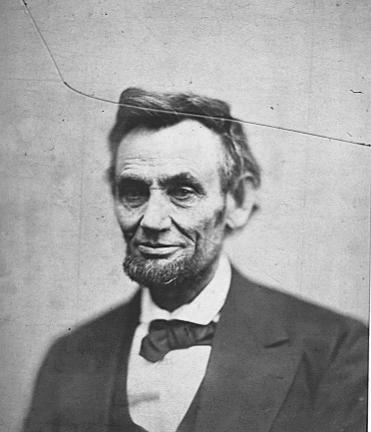
photo of abraham lincolnToday marks the 199th birthday of Abraham Lincoln.

Don't get too excited. Plans have been in place for some time to celebrate Lincoln's Bicentennial with pomp and circumstance which is befitting for such an outstanding historical figure.

In Illinois, they take Lincoln's birthday seriously as all Chicago public schools and state offices will be closed. Although garbage will be picked up as normal. I'm sure Abe wouldn't have it any other way.

Lincoln was born in Hodgenville, Kentucky, where apparently everything is named Lincoln. And where the lion share of the Bicentennial celebration will occur.

He spent his summers in Washington DC.

He spent much of his childhood in Indiana, where there is a national memorial. And where Indiana will also be celebrating Lincoln's 200th birthday. And where Spencer County Indiana is excited for all the publicity.

And now this guy is claiming Lincoln's ties to Idaho are stronger than any other state.

All of this begs the question... which state is Lincoln's true home state? My thoughts are all of them can claim Lincoln as their own. Can't we in Philadelphia and those in Cincinnati both claim Pete Rose?

Want to figure it all out... try ALincolnBlog.Blogspot.com, by Brian Dirck, professor at Anderson University and author of several Lincoln books. It is always my first stop for Lincoln information.
Here's his take on the states claiming Lincoln.

The Lincoln Bicentennial website really is a cool site. It has a Lincoln quiz, an interactive timeline, all sorts of Lincoln information, and lesson plans for teachers. Check it out - http://www.lincolnbicentennial.gov/

Oh... and Happy Birthday Abe.

Read More...

Saturday, February 09, 2008

Quote for Thought

Have been watching Gandhi the 1982, best picture starring Ben Kingsley. With so many similarities between Gandhi and Martin Luther King, it is only fitting that I stumbled upone this quote from MLK:

"A genuine leader is not a searcher for consensus but a molder of consensus."

In thinking about both men, the quote is very appropriate.

Read More...

Saturday, February 02, 2008

Jamestown: How John Rolfe, Tobacco and Worms Changed the Landscape of America

Yes, you read that correctly. Nightcrawlers. Worms. Big brown, squishy worms. The ones that come out in the rain and at night when it's cooler. So what do worms have to do with American history? Continue reading, and you'll see the connection.

To the layman, John Rolfe is a nobody. To those that paid attention in history class they may know him as the man that married Pocohontas. History buffs know him as the man that saved Jamestown, with the sale of tobacco. Still some think he may be responsible for a permanent change in the American landscape. A change which stretches much further than the salty marshes of Jamestown.

Rolfe was a businessman who undercut Spanish imports by growing tobacco in Jamestown. Rolfe had brought a special strain of tobacco seed with him to the new colony. This particular strain was being grown in Trinidad and Venezuela. Rolfe brought the seeds despite the penalty of death to anyone selling these seeds to a non-Spaniard.

John Rolfe, like many other Englishmen of the time, was a smoked tobacco. Smoking tobacco was a fad brought to Europe by the Spanish, after there conquest of the Caribbean. Coincidentally the Indians in Virginia also smoked tobacco, but it was a different species which didn't agree with the European pallate. According to colonists it was poor and weak. Rolfe's tobacco on the other hand was "pleasant, sweet and strong." By 1620, ten years after settlement, Jamestown exported 50,000 pounds of Rolfe's special strain, and nearly six times that ten years later.

Because of the popularity of Rolfe's tobacco the tight waters of the Chesapeake were often crowded with empty ships ready to be loaded with the sweet stuff. To balance the weight of the ships, sailors dumped out the ballast, which was filled with mostly stones and soil. Historians believe this dirt almost certainly contained earthworms.

earthworms changed america's landscapeAnd little by little these earthworms would change the landscape of America. Before the arrival of the Europeans, the forests of New England and the upper Midwest had no earthworms. At least not since the last Ice Age. Without earthworms, the northern trees and shrubs would lose their leaves, which would lie on the ground and decompose their way back into the soil feeding the trees from which they dropped. The presence of worms, turns these leaf-floored forests into a more open and dry landscape losing much of their future growth. In other words, the seedlings have no protection and nowhere to root, eliminating any chance for a dense forrest. Instead an open landscape of very mature trees exists.

It is not proven that Rolfe brought the worms, but it is known that the northern forests were worm free until the arrival of the Europeans. Earthworms don't move that fast and pretty much die where they were born, so the migration of the worms from coastal Virginia to the far reaches of the United States surely takes some time to see the real effects. Perhaps another 400 years.
Thanks to Charles C. Mann and his article 'America, Found & Lost' which appeared in the May 2007 National Geographic for the information.

Read More...

Thursday, January 31, 2008

The Antiques Roadshow Takes A Closer Look at American History

While aimlessly flipping the channels a few nights ago, which doesn't happen as much as it used to now that we've upgraded to DVR, I stopped on the Antiques Roadshow.

This show always intrigues me with the background and history associated with each item. The appraisers are often times extremely knowledgeable in history and will associate the piece and how it was made with the era from which it came. To me, this makes the show very much worth watching.

But this night of the Antiques Road Show became especially enjoyable when they focused on a political sign from the 1840 election brought in by a man who inherited it from his family. The story goes that his great-grandmother, had made the sign in support of James K. Polk. The banner was appraised at $5-7,000 at auction.

His father's grandmother, was related to Abraham Lincoln. "One branch of the Lincoln family produced a gentleman by the name of Abraham," he told appraiser Catherine Williamson of Bonham & Butterfields in Los Angeles. "And the other branch of the family produced me."

I find it curious that during that era women weren't allowed to vote. But in the true democratic fashion, this woman decided to take the time to hand paint letters onto a banner which was approximately 15 by 6, using stencils. This was her way of campaigning.

Her favorite, Polk eventually did win the election on his platform of territorial expansion. He favored the annexation of Texas and the acquisition of the entire Oregon Territory, which at that time was shared with Britain. He was also pro-slavery. Polk was obviously the democratic nominee.

On the other hand Clay, representing the Whigs, had lost elections in 1824 and 1832, was against expansion and was anti-slavery. I've always been a big fan of Henry Clay, mostly because he was a man of strong convictions. He was never willing to give up. Known as the Great Compromiser his skill in negotiations staved off the Civil War twice in in 1820 with the Missouri Compromise and again with the Compromise of 1850. He also ran for president 5 times.

But back to the task at hand...

You can see the whole appraisal here: http://www.pbs.org/wgbh/roadshow/archive/200702A10.html

Who knew the Antiques Roadshow was so Web 2.0. They have archived every appraisal they've done on TV and created a pretty cool search engine to find them too.

I tuned out after that, but was a little upset that I didn't continue watching. What came next was from the personal archives of the White House photographer for JFK.

"I was in Dallas during the horrible assassination," he told appraiser Francis Wahlgren of Christie's in New York as he recounted the details of that day. Once he realized Kennedy had died, he got on the plane with Lyndon Johnson and Jacqueline Kennedy and photographed Johnson's swearing-in ceremony.

The value of that photograph, autographed by LBJ, was $50,000, while a signed photo of the Kennedy family was appraised at $25,000.

And apparently this was THE episode to watch for american history aficianados as a Civil War Henry Repeating rifle was also appraised.
http://www.pbs.org/wgbh/roadshow/archive/200702A34.html

References:

Article about Antiques Roadshow - http://www.floridatoday.com/apps/pbcs.dll/article?AID=/20080126/LIFE/801260301/-1/archives

Missouri Compromise - http://en.wikipedia.org/wiki/Missouri_Compromise
Compromise of 1850 - http://en.wikipedia.org/wiki/Compromise_of_1850

Read More...